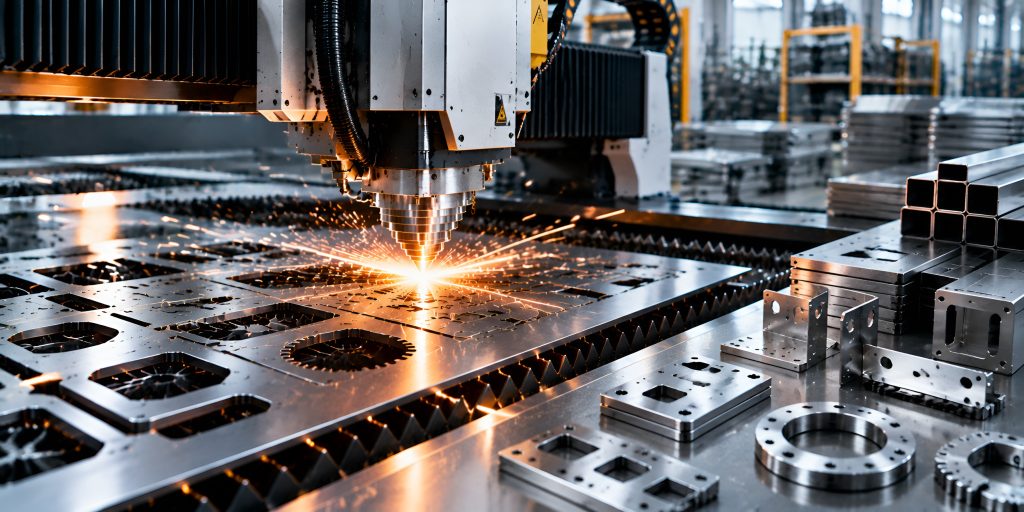
Laser cutting, welding, grinding and metal finishing processes can generate fine dust and fumes that place demanding requirements on industrial dust collection.
Filter media selection should support stable airflow, effective dust release and reliable performance under repeated pulse-cleaning cycles. Depending on the process and dust characteristics, antistatic, PTFE membrane and flame-retardant media options may be considered.
Metal processing can generate fine particulate that requires effective capture while maintaining suitable airflow and pressure drop.
Fine or sticky dust can increase differential pressure. Good surface dust release supports more effective pulse cleaning.
For applications involving static-sensitive or potentially combustible dust, electrostatic properties are an important consideration.
Media should maintain filtration and mechanical stability through repeated cleaning cycles.
Antistatic media is designed for applications where electrostatic charge accumulation needs to be controlled. Available options may include aluminized antistatic media and conductive-fiber media.
PTFE membrane media supports surface filtration, fine-particle capture and improved dust release. Where both fine filtration and electrostatic control are required, it may be combined with an antistatic base media.
Flame-retardant media may be considered where the application or dust collection system requires additional flame-retardant properties. Depending on operating requirements, FR treatment can also be combined with other media technologies.