Filter bags and filter cartridges both remove particles from industrial air streams, but their geometry, media construction, cleaning behavior and preferred applications differ. The collector design and process conditions should determine the choice.
| Quick Answer Filter bags and filter cartridges both remove particles from industrial air streams, but their geometry, media construction, cleaning behavior and preferred applications differ. The collector design and process conditions should determine the choice. |
Basic construction
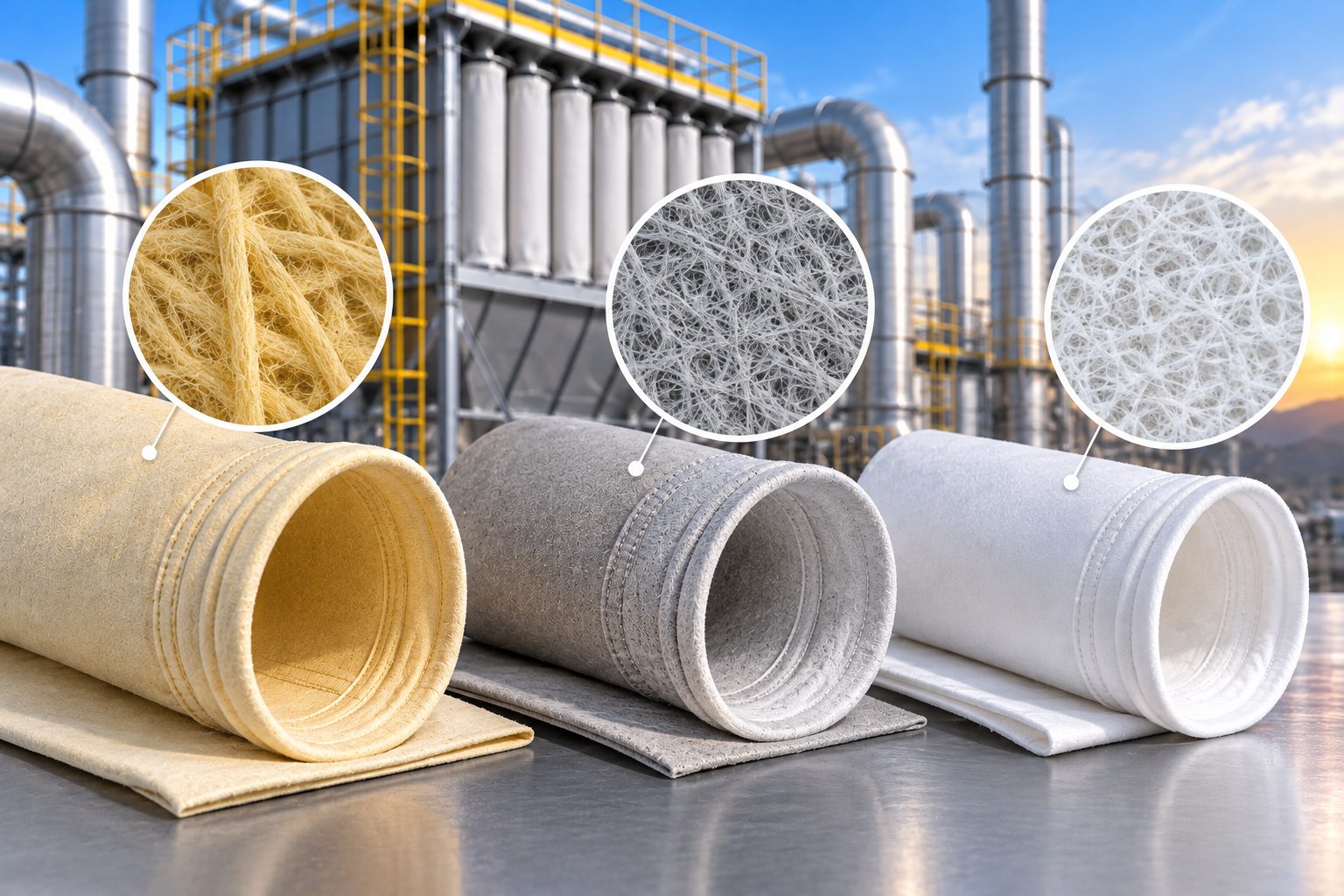
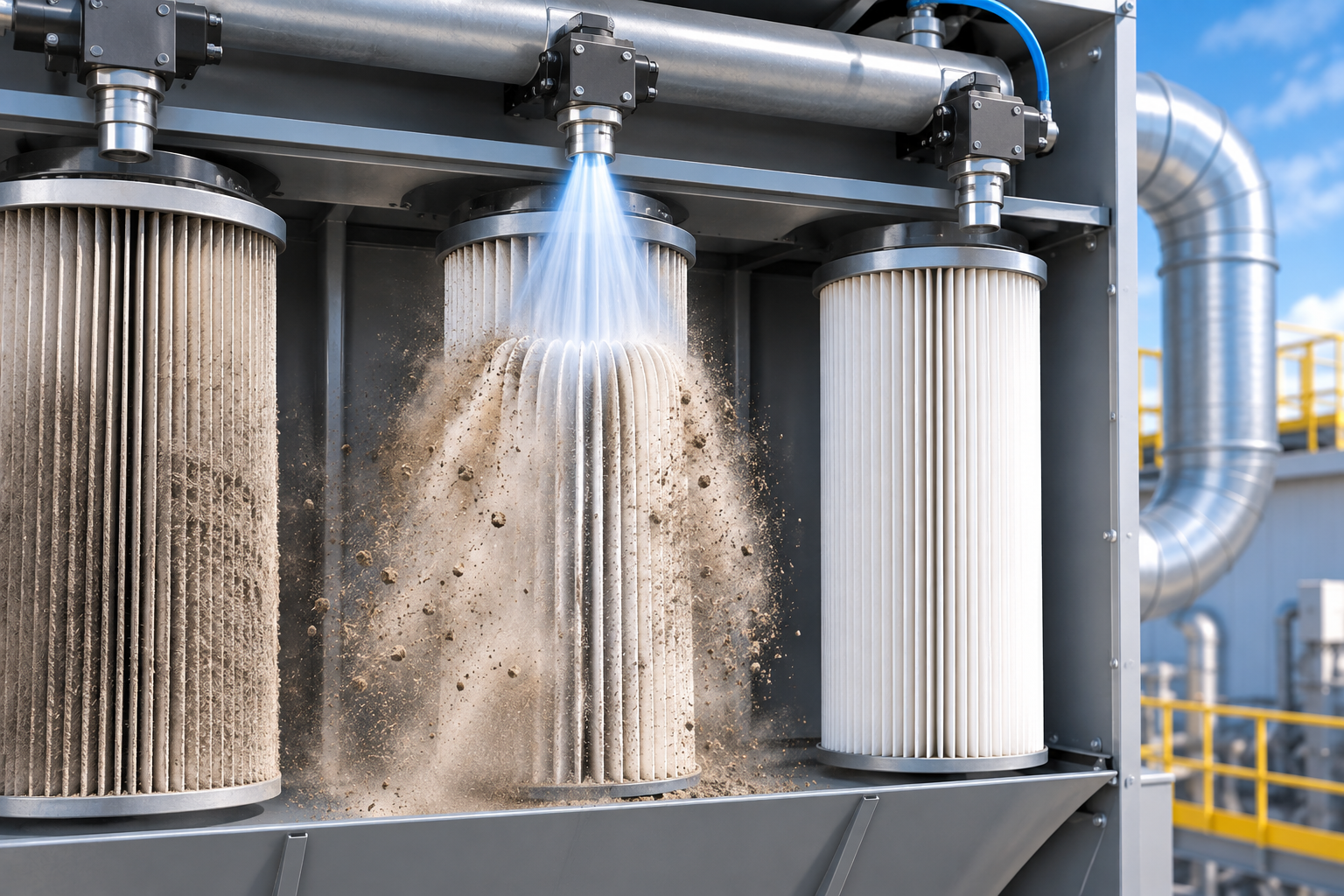
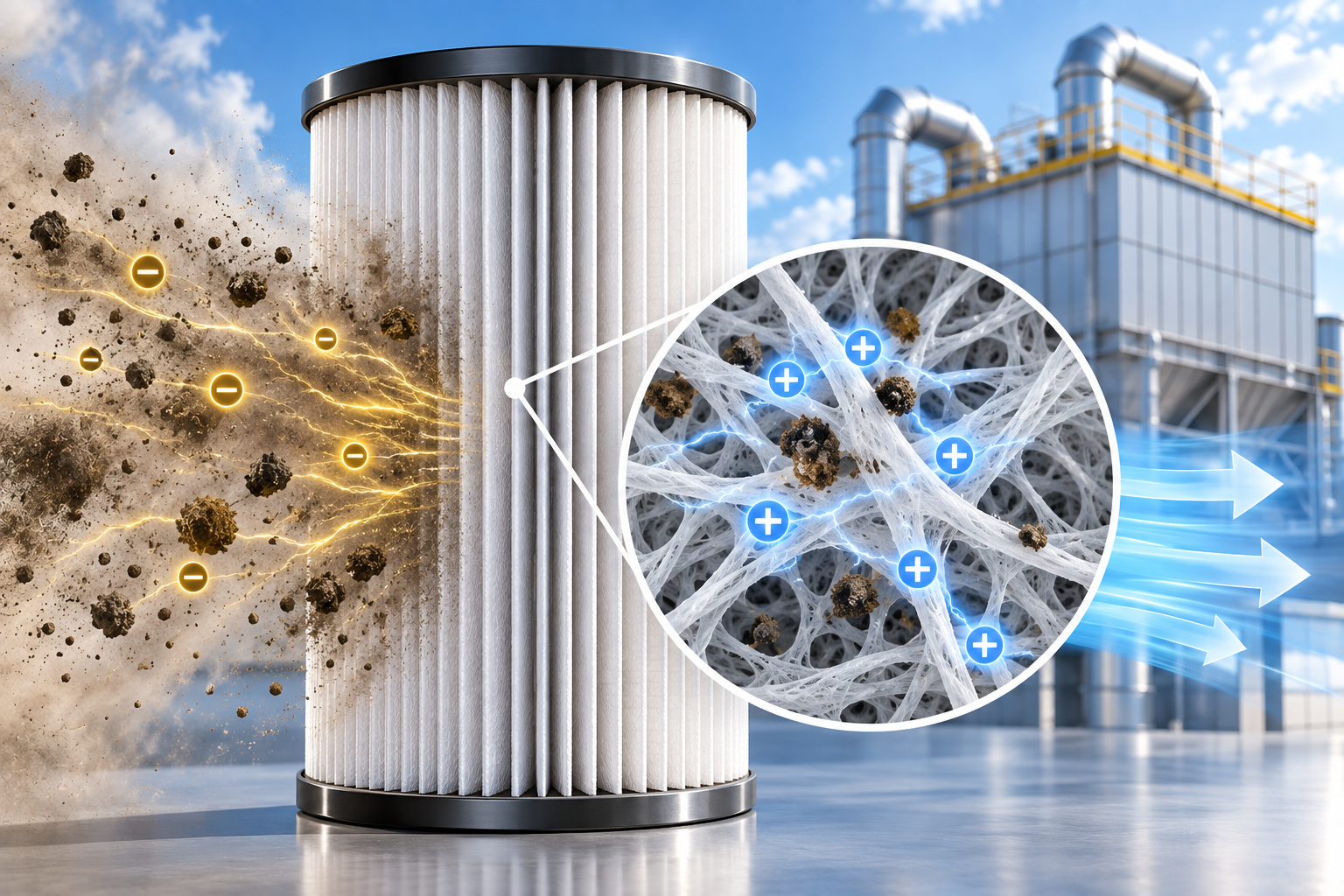
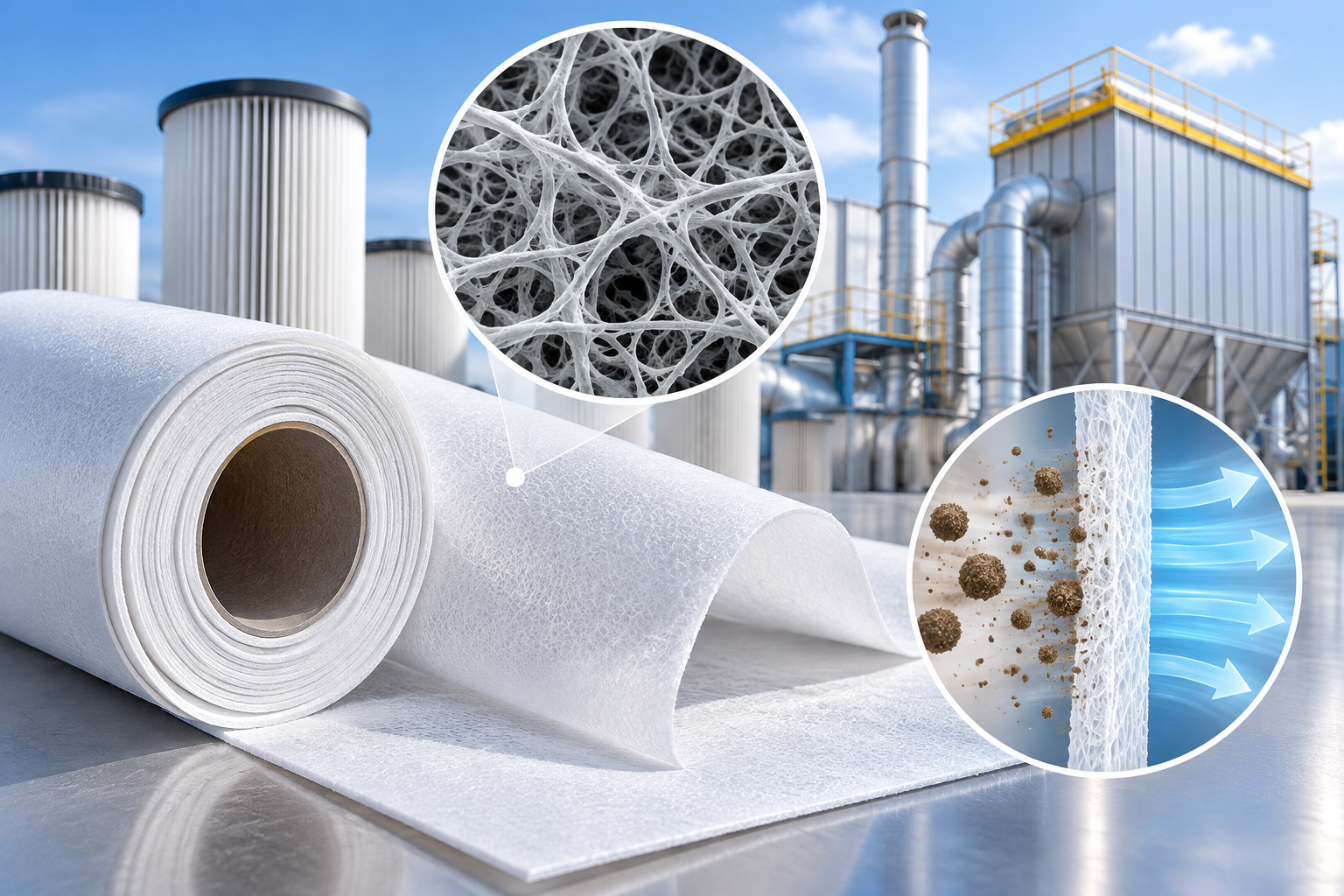
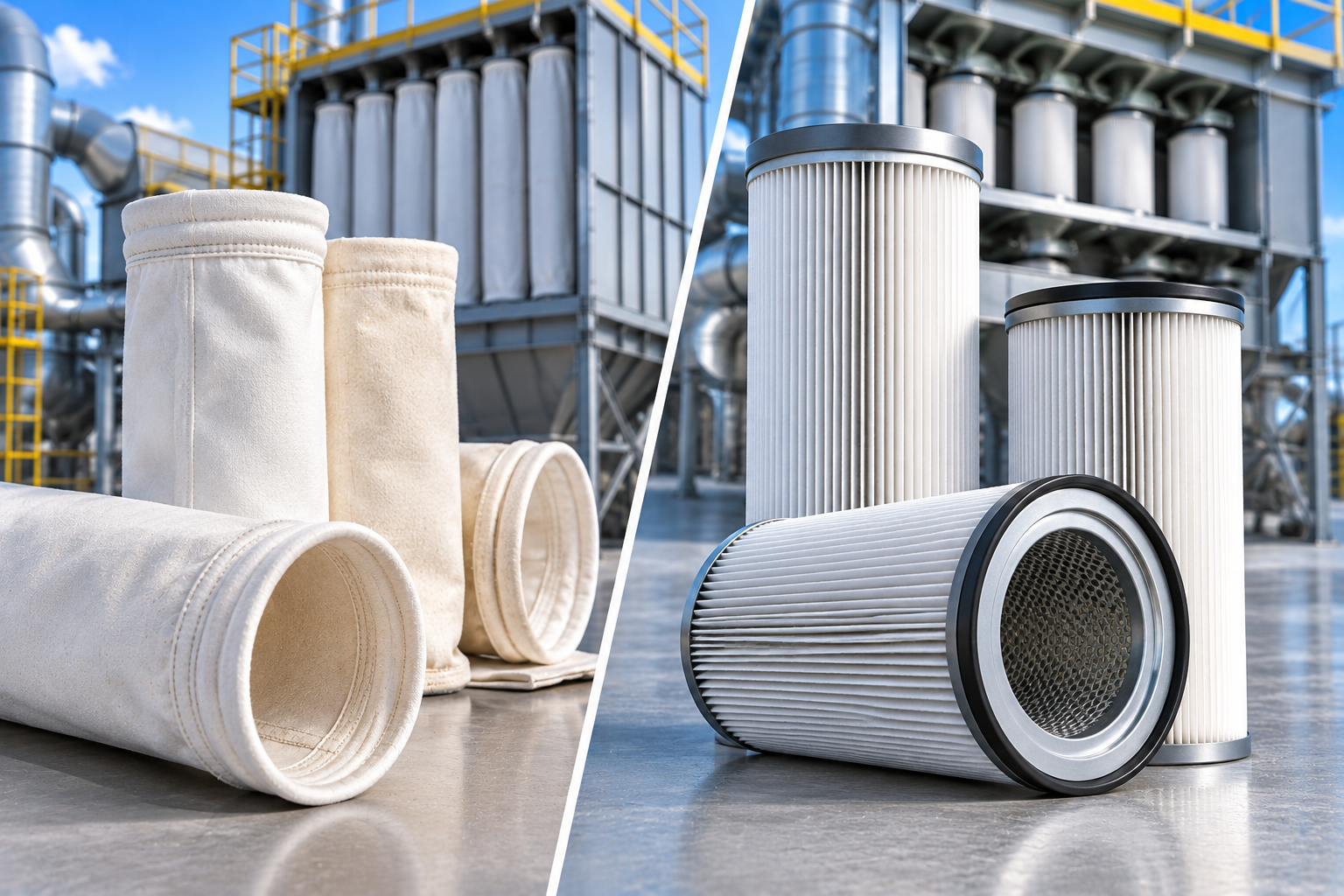
A filter bag is a long tubular or envelope-shaped element, usually made from needle-punched felt or woven fabric and supported by a cage in pulse-jet systems. A filter cartridge uses pleated media formed around a support core. Pleating creates a large filtration area in a relatively compact element.
Comparison at a glance
- Space: cartridges provide high media area in a compact housing; bags may require taller collectors.
- Dust loading: bags are often robust in heavy bulk-dust service; cartridges can perform well when inlet loading and dust distribution are controlled.
- Particle capture: both can use surface treatments or membranes for fine dust.
- Temperature: baghouses offer a broad range of high-temperature felt options; cartridge media is more limited by pleatability and component construction.
- Cleaning: both may use pulse jets, but geometry and cleaning-wave distribution differ.
- Maintenance: cartridges can be quick to replace; long bags and cages may require more vertical access.
When cartridges are often preferred
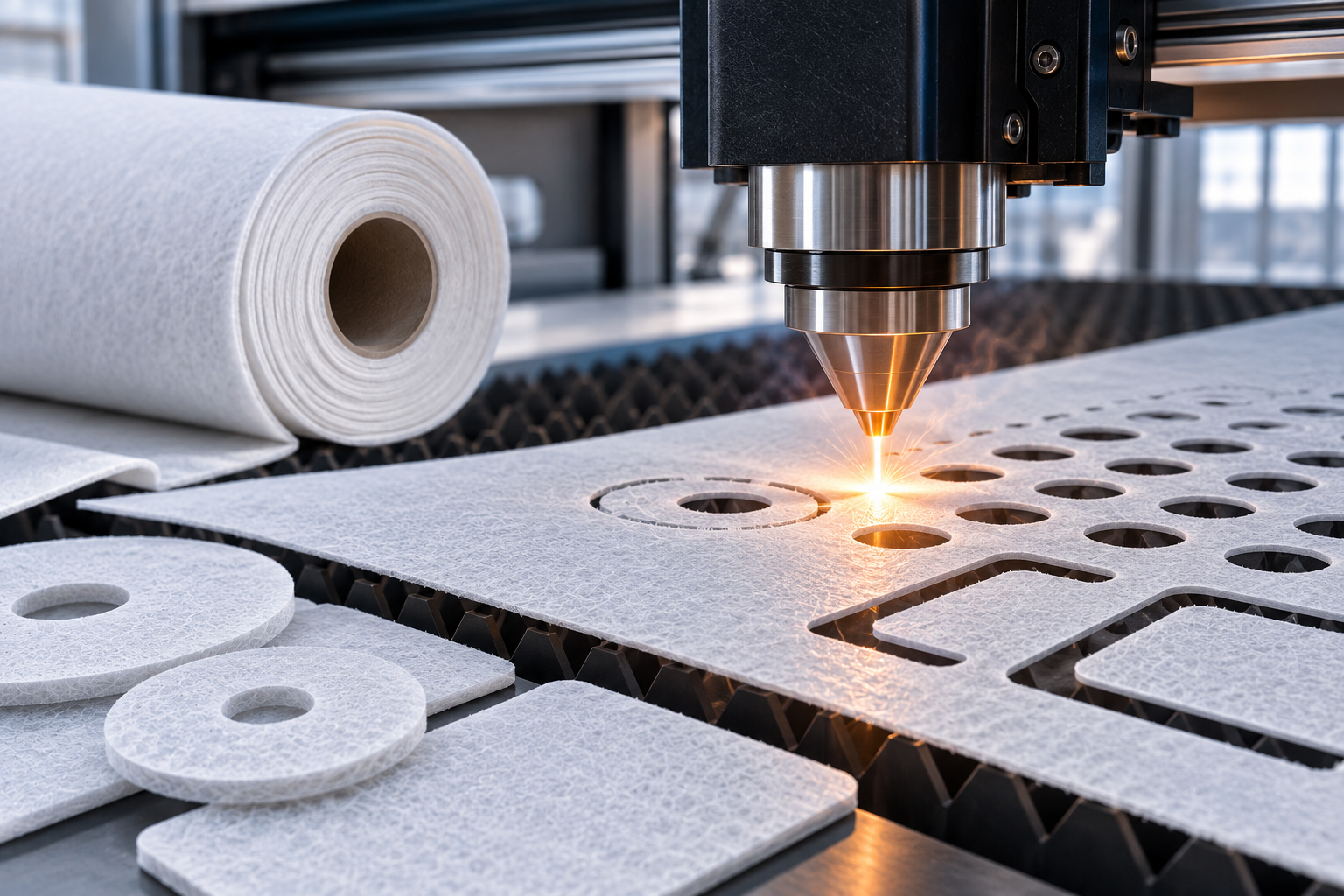
Cartridge collectors are common in metalworking, welding fume, laser cutting, powder coating and other applications where fine dust, compact equipment and high filtration area are important. Pleat spacing and inlet design are critical when dust is fibrous, sticky or heavily loaded.
When bags are often preferred
Filter bags are widely used for cement, minerals, steel, power, chemicals and other bulk processes with high dust loads, abrasive particles or elevated temperatures. Media can be selected from polyester, aramid, PPS, polyimide, fiberglass and PTFE families according to the gas conditions.
Why filtration area alone can mislead
The nominal area of a tightly pleated cartridge may not all be used effectively if dust bridges the pleats or cleaning energy cannot reach the inner channels. Likewise, a baghouse must maintain appropriate air-to-cloth ratio and dust release. Effective area, dust distribution and cleaning behavior matter more than a catalogue number alone.
Selection checklist
- Dust concentration, particle size, abrasiveness, shape and stickiness.
- Normal and peak temperature, humidity, dew point and gas chemistry.
- Available footprint and maintenance access.
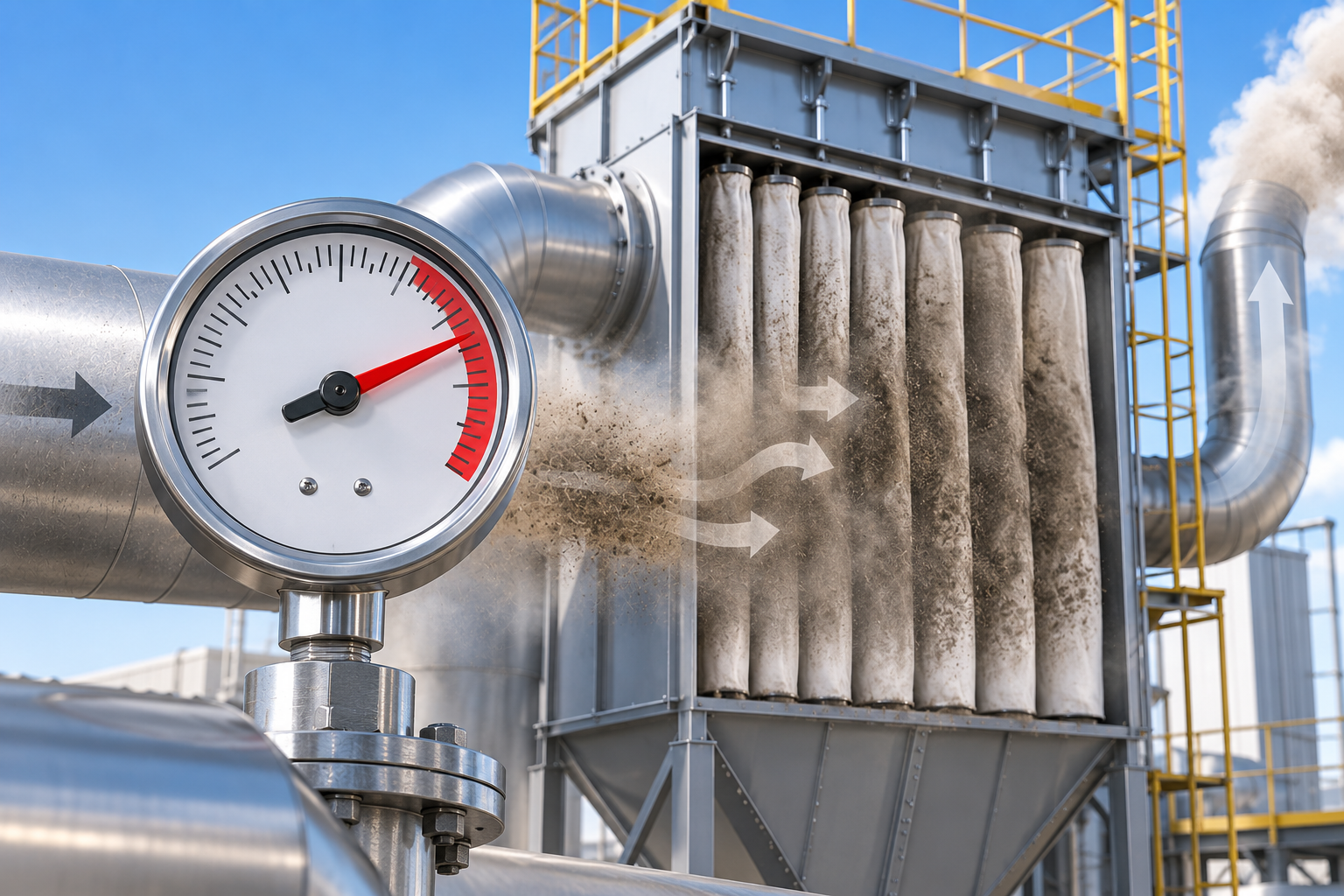
- Required airflow, pressure-drop range and cleaning method.
- Combustible-dust and fire-risk controls.
- Expected service life, replacement time and total operating cost.
Frequently Asked Questions
Can a filter cartridge replace a filter bag directly?
Usually not without engineering review. The housing, tubesheet, sealing, airflow and cleaning system are designed around the element geometry.
Which has lower pressure drop?
Neither category is always lower. Media, filtration area, face velocity, dust cake and cleaning condition determine operating resistance.
Can both use PTFE membrane?
Yes. Membrane-laminated bag and cartridge media are available, but the support material and conversion method differ.
Technical and safety note
Final media selection must be based on the actual dust, gas composition, temperature, humidity, airflow, cleaning system and collector design. Combustible-dust, fire and explosion controls require a complete system risk assessment by qualified professionals; filter media is only one component.