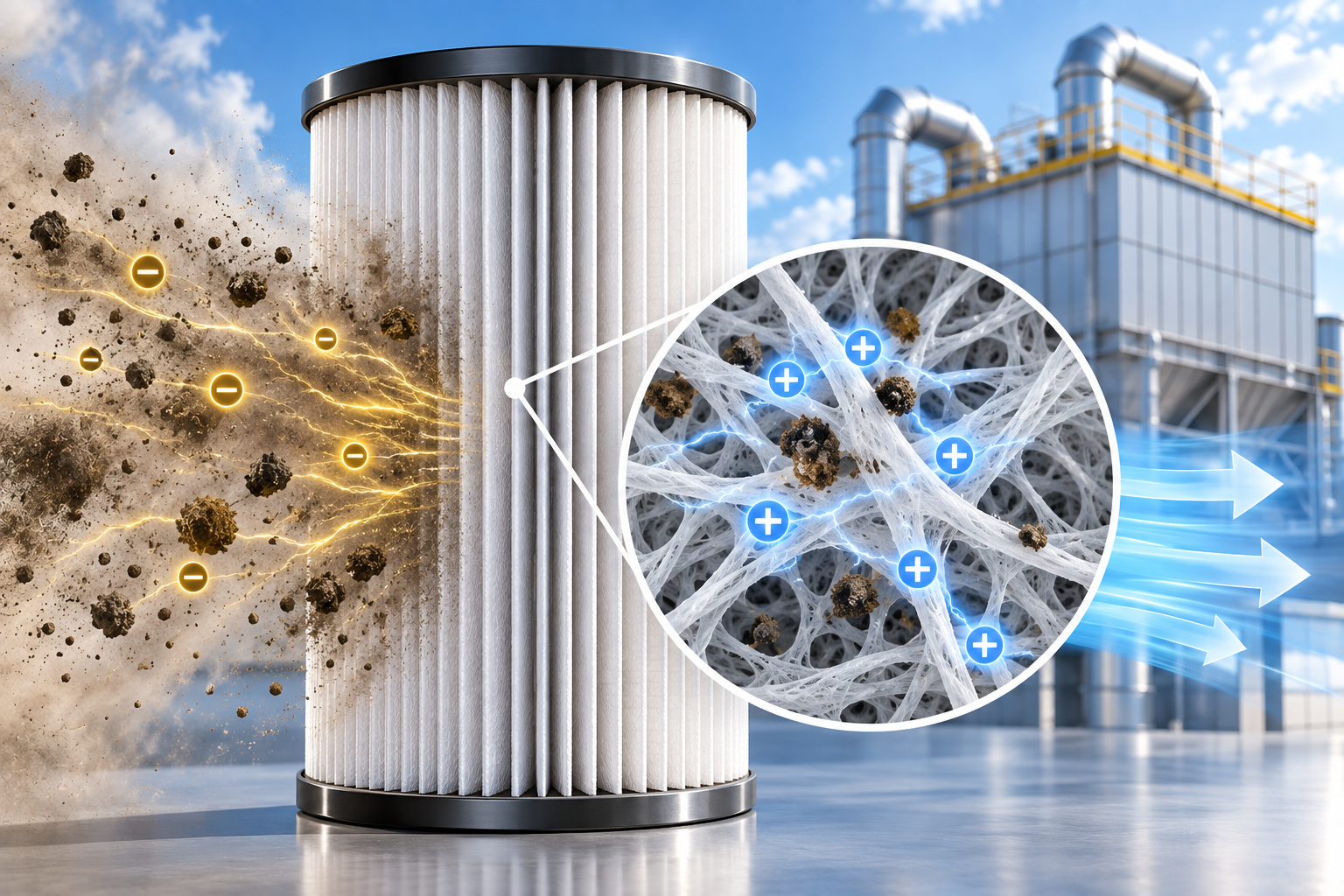
Antistatic filter media provides an electrically dissipative path that helps charge move away from the filtration surface. It is one element of a complete electrostatic and combustible-dust risk-control strategy, not a stand-alone guarantee against ignition.
| Quick Answer Antistatic filter media provides an electrically dissipative path that helps charge move away from the filtration surface. It is one element of a complete electrostatic and combustible-dust risk-control strategy, not a stand-alone guarantee against ignition. |
Why static charge develops
Dry particles moving through ducts, rubbing against filter surfaces and separating from materials can generate electrostatic charge. Charge accumulation depends on the dust, humidity, airflow, equipment materials and electrical continuity. Insulating media may allow localized charge to remain longer.
Common antistatic constructions
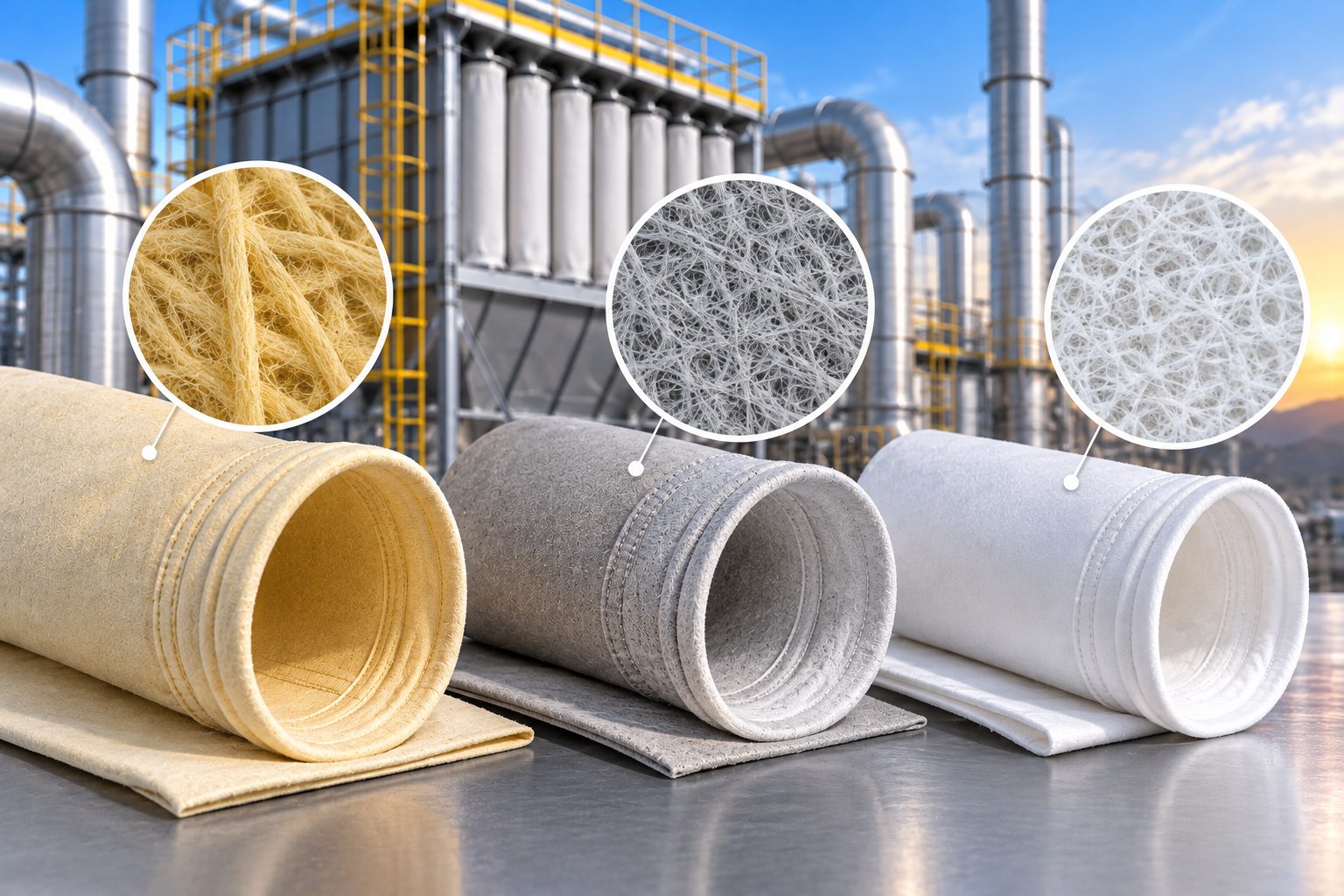
- Conductive-fiber media: carbon or other conductive fibers are incorporated through the nonwoven structure.
- Conductive surface coating: a conductive layer or finish is applied to one or both surfaces.
- Aluminized media: a metallic surface layer can provide conductivity and surface characteristics suited to selected applications.
- Conductive grids or scrims: conductive yarns create a network within or on the media.
The conductive path must continue through the filter
A conductive media sample can test well but fail to dissipate charge after conversion if the path is interrupted. Pleat adhesive, end caps, gaskets, support cages and mounting hardware must connect the media to the grounded collector as intended. Surface resistance should therefore be checked on both the media and the finished filter where the application requires it.
Antistatic does not mean explosion-proof
Antistatic media can reduce one potential ignition mechanism, but it does not determine whether a dust is combustible, eliminate all ignition sources or replace explosion protection. The dust hazard analysis, equipment grounding and bonding, ventilation, isolation, venting or suppression measures must be defined by qualified safety professionals and the applicable local requirements.
Questions to ask before selection
- Is the dust combustible or simply prone to static adhesion?
- What resistance range and test method are specified?
- Will the media be tested in a conditioned environment?
- How will the conductive layer connect to the metal filter structure and collector ground?
- Are flame-retardant, membrane, oil/water-repellent or food-contact properties also required?
- Could wear, cleaning or contamination change conductivity during service?
Verification during filter production
Control the orientation of any conductive surface, confirm electrical continuity across joints and inspect the connection between the filter element and mounting system. Document the test method, electrode arrangement, conditioning and acceptance range so that results from different suppliers are comparable.
Frequently Asked Questions
What is the difference between antistatic and conductive media?
Terminology varies by market. Always define the required resistance range and test method instead of relying only on the product label.
Does carbon fiber make the entire cartridge antistatic?
Not automatically. The conductive path must continue through the filter construction to a verified ground.
Can an antistatic media also have a PTFE membrane?
Yes. Antistatic membrane composites are available, but both filtration and electrical performance should be verified after conversion.
Technical and safety note
Final media selection must be based on the actual dust, gas composition, temperature, humidity, airflow, cleaning system and collector design. Combustible-dust, fire and explosion controls require a complete system risk assessment by qualified professionals; filter media is only one component.