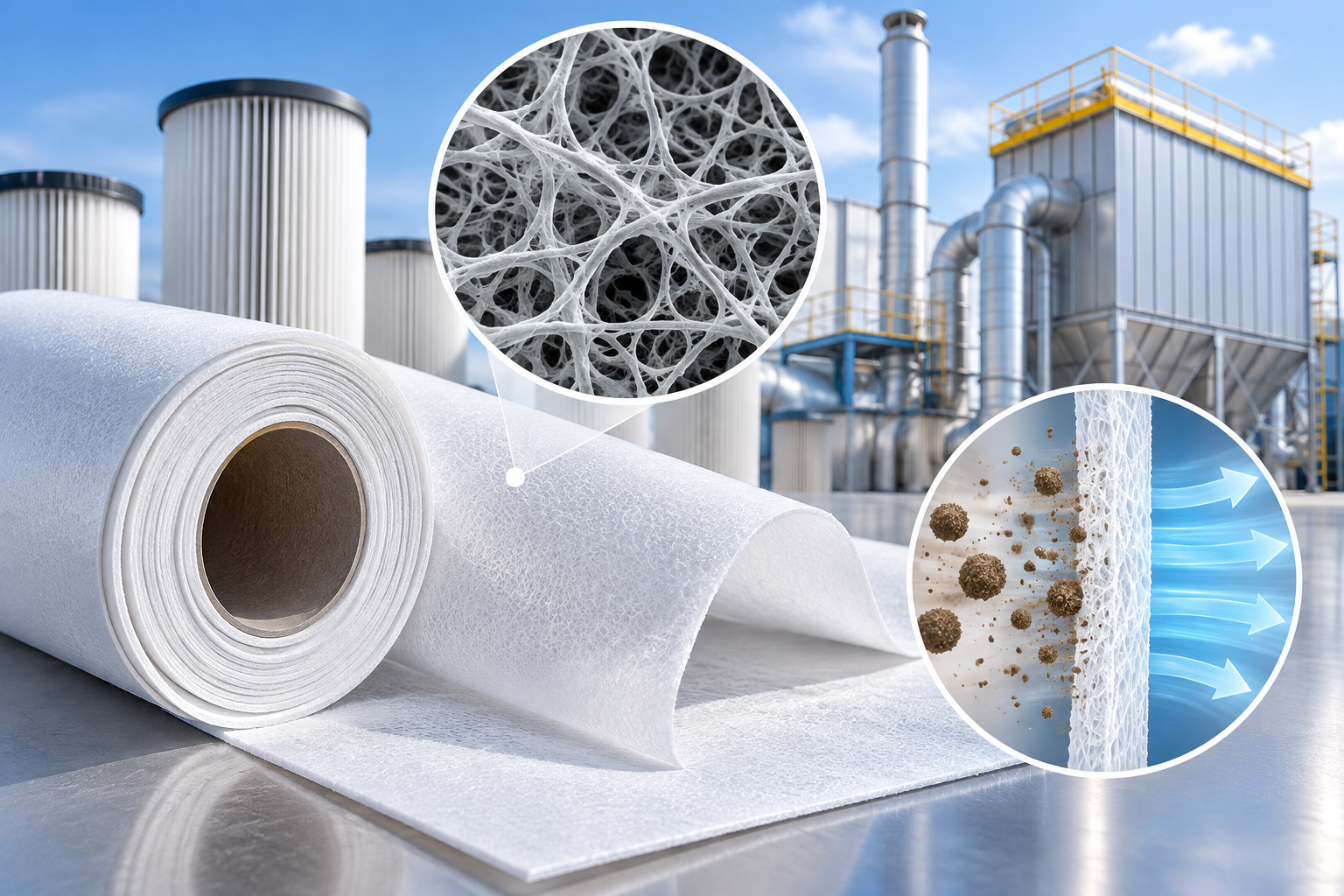
In industrial dust collection, a PTFE membrane is a thin microporous layer laminated to a supporting filter medium. It captures particles mainly at the surface instead of allowing them to penetrate deeply into the base media.
| Quick Answer In industrial dust collection, a PTFE membrane is a thin microporous layer laminated to a supporting filter medium. It captures particles mainly at the surface instead of allowing them to penetrate deeply into the base media. |
PTFE membrane and ePTFE explained
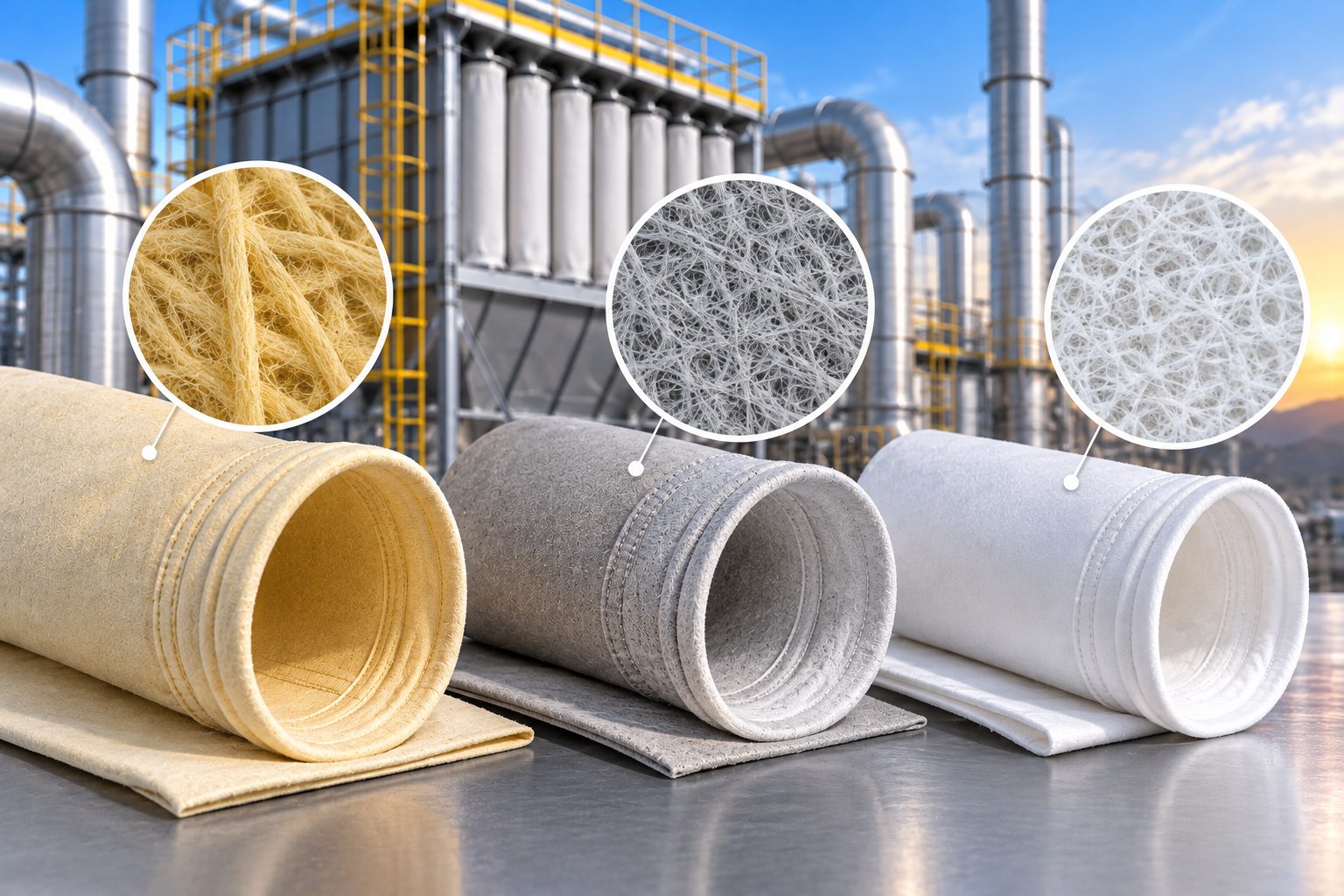
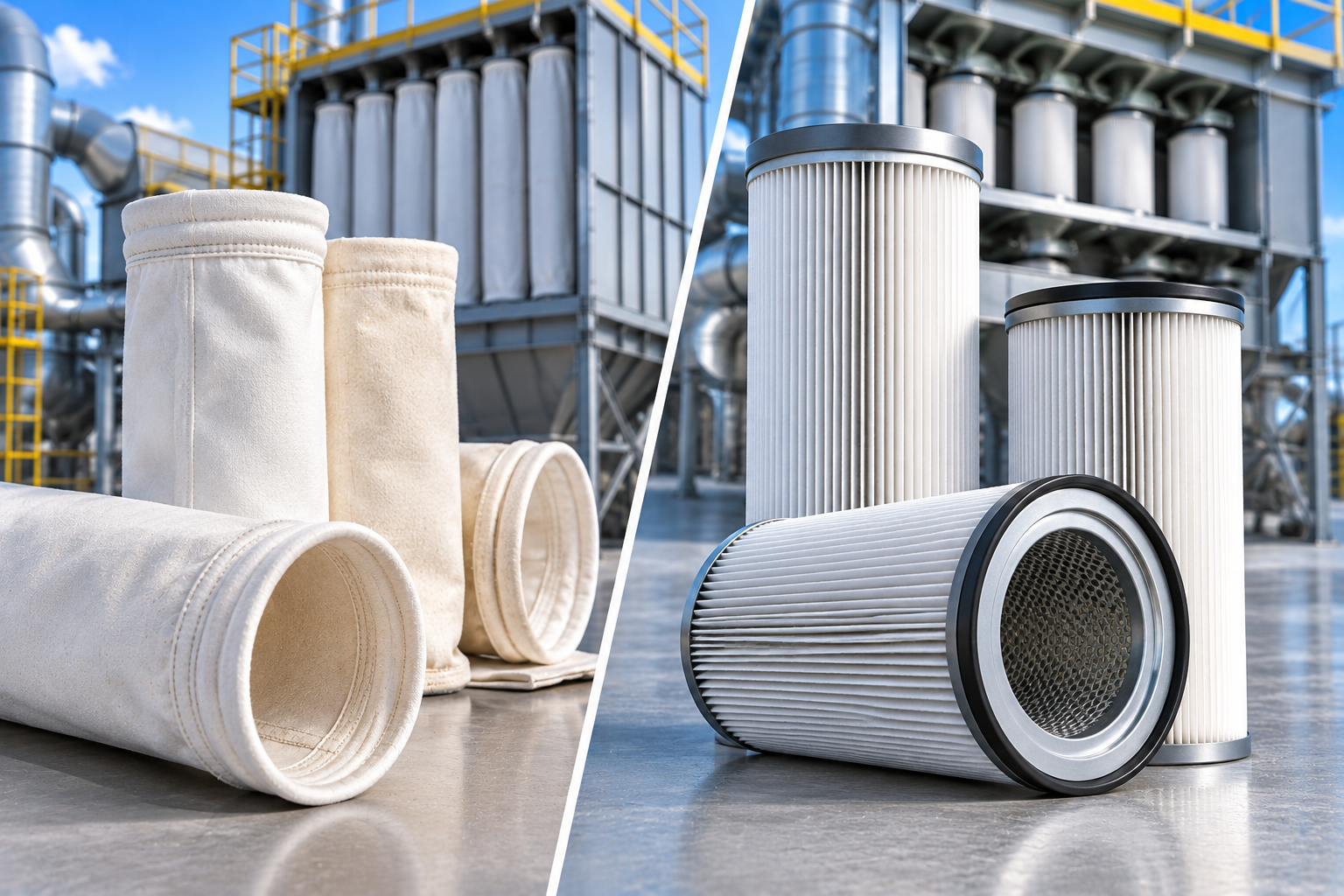
PTFE is polytetrafluoroethylene. For dust filtration, the functional layer is commonly expanded PTFE, or ePTFE. Expansion creates a network of microscopic fibrils and pores. Because the membrane is thin, it normally requires a stronger support such as polyester spunbond, fiberglass fabric or high-temperature felt.
How surface filtration works
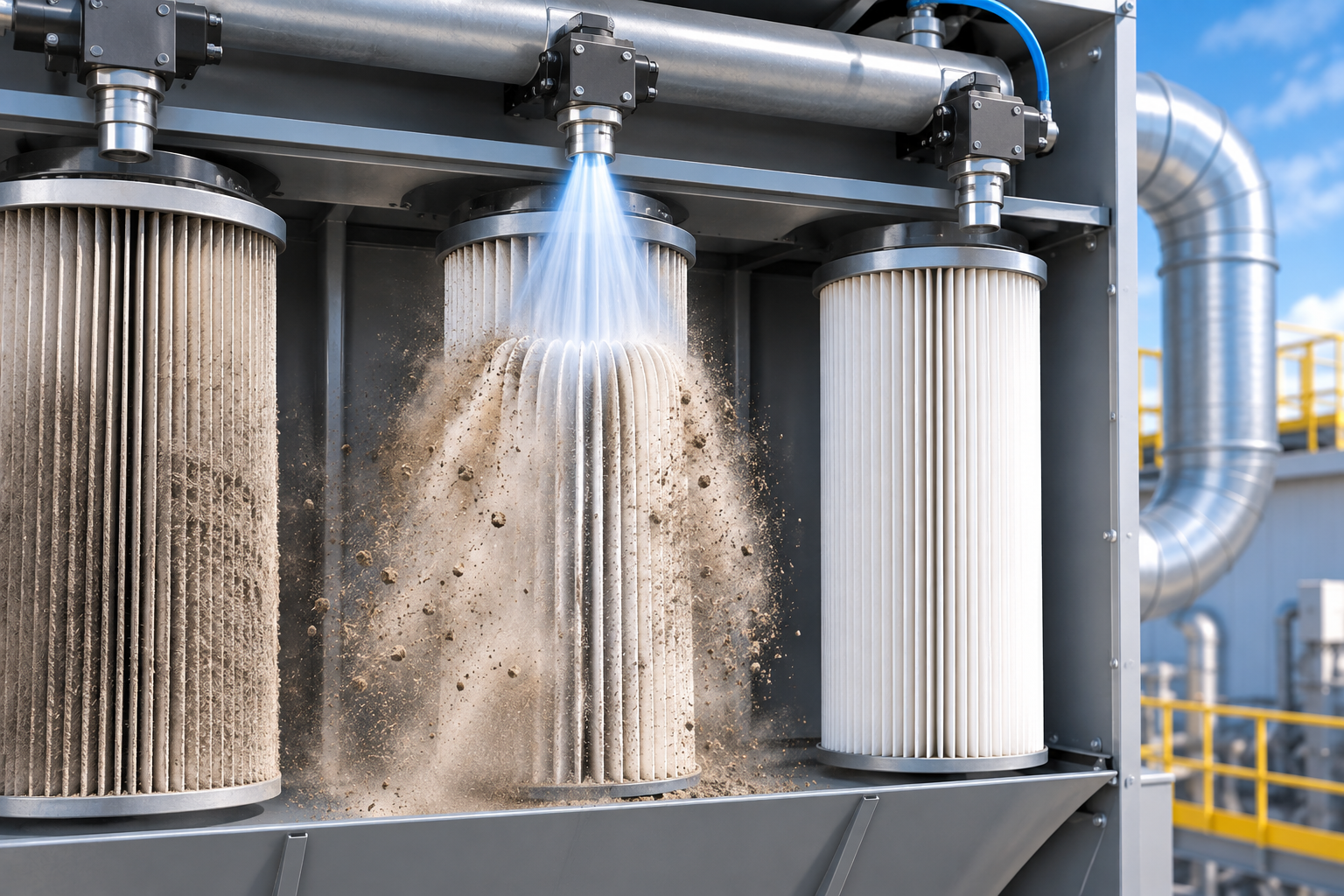
As dusty air reaches the membrane, particles are intercepted at or near the upstream surface. A dust cake forms on top of the membrane and can be released by pulse cleaning. This contrasts with depth-loading media, where some particles enter the internal pore structure and may become difficult to remove.
Potential performance benefits
- High initial capture efficiency for fine particles when the membrane and composite are correctly designed.
- Reduced internal dust penetration and more consistent surface loading.
- Improved dust release for many dry, difficult or fine powders.
- A more stable filtration mechanism from the beginning of service, without relying on a deep dust cake to develop efficiency.
- Possible reduction in compressed-air demand or cleaning frequency after system optimization.
A membrane is not automatically the right choice
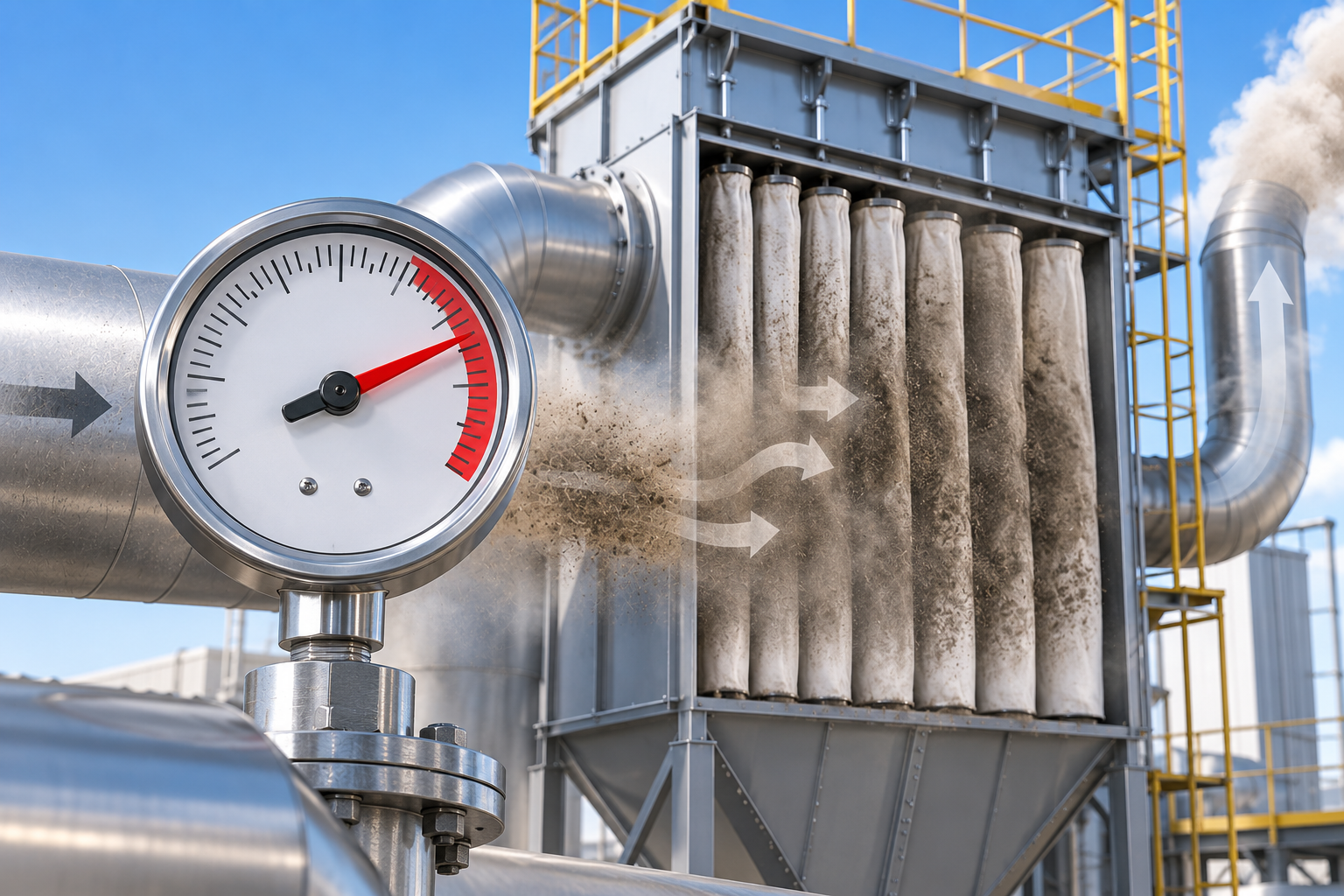
Sticky dust, condensation, oil mist or poor pulse distribution can still blind a membrane surface. A membrane composite may also have higher initial resistance than an open untreated medium. The selection must consider air permeability, membrane adhesion, support strength, pleat spacing, dust loading and the collector’s available fan and cleaning capacity.
PTFE membrane is not the same as PTFE fiber media
A PTFE membrane is a thin surface layer. PTFE fiber media is a three-dimensional felt or fabric made predominantly from PTFE fibers for severe temperature and chemical conditions. The two products have different constructions, costs and selection logic. A high-temperature article should state clearly whether ‘PTFE’ means a membrane finish, a PTFE-fiber felt or both.
Quality checks for membrane media
- Air permeability and pressure drop at a defined test condition.
- Filtration efficiency at the relevant particle size or standard.
- Membrane coverage, pinholes and surface uniformity.
- Lamination strength and resistance to pleating or flexing.
- Dust loading, cleaning recovery and residual pressure drop.
- Compatibility with adhesives, potting compounds and cartridge production temperatures.
Frequently Asked Questions
Is PTFE membrane waterproof?
PTFE is hydrophobic, but a membrane-laminated filter assembly is not automatically waterproof. Seams, seals, substrate and pressure conditions also determine water resistance.
Does PTFE membrane always lower pressure drop?
Not necessarily. It may improve dust release and long-term stability, while its clean-media resistance depends on membrane structure and composite design.
Can PTFE membrane be antistatic?
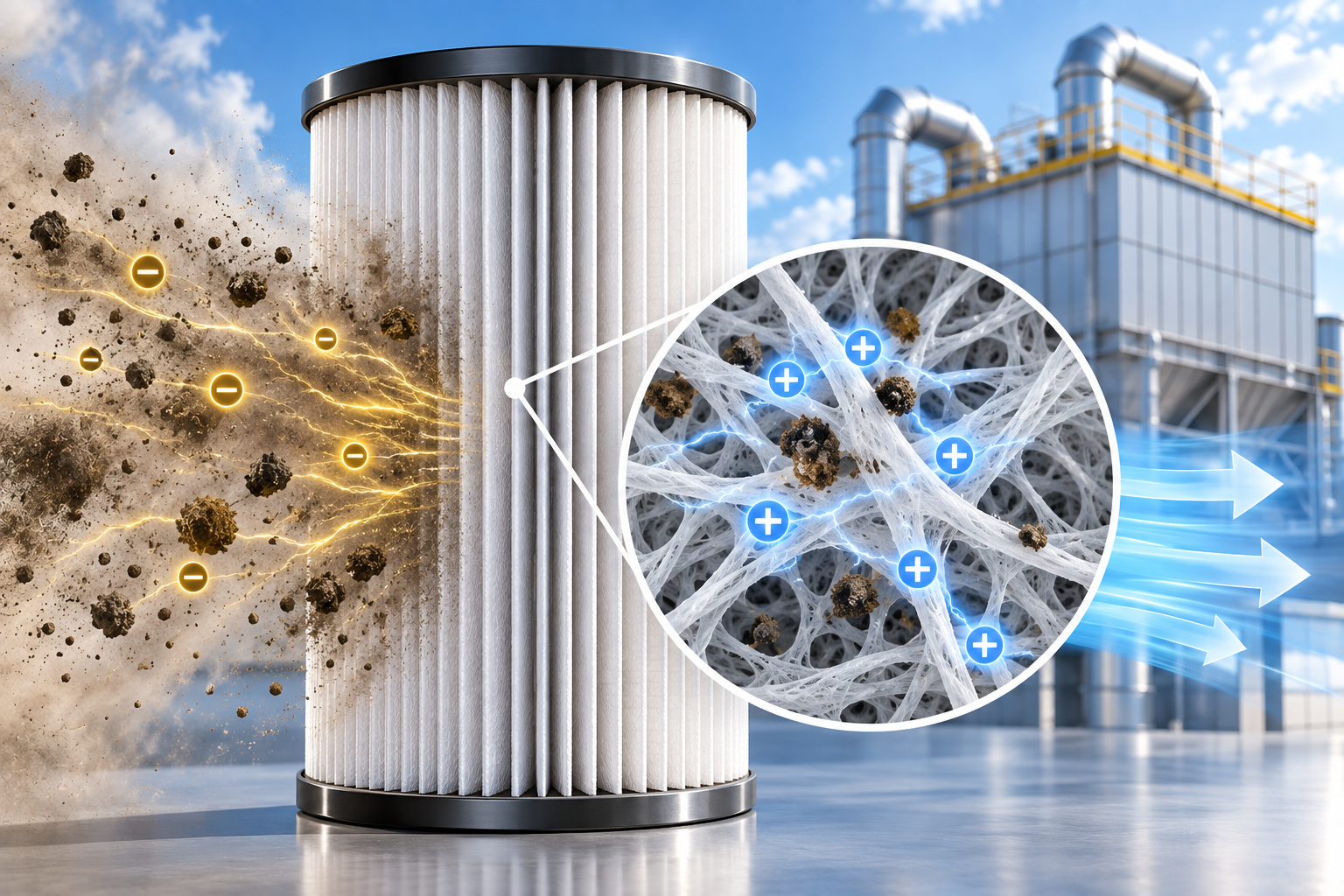
Antistatic membrane composites are available, but electrical performance depends on the full conductive path through the media and filter construction.
Technical and safety note
Final media selection must be based on the actual dust, gas composition, temperature, humidity, airflow, cleaning system and collector design. Combustible-dust, fire and explosion controls require a complete system risk assessment by qualified professionals; filter media is only one component.