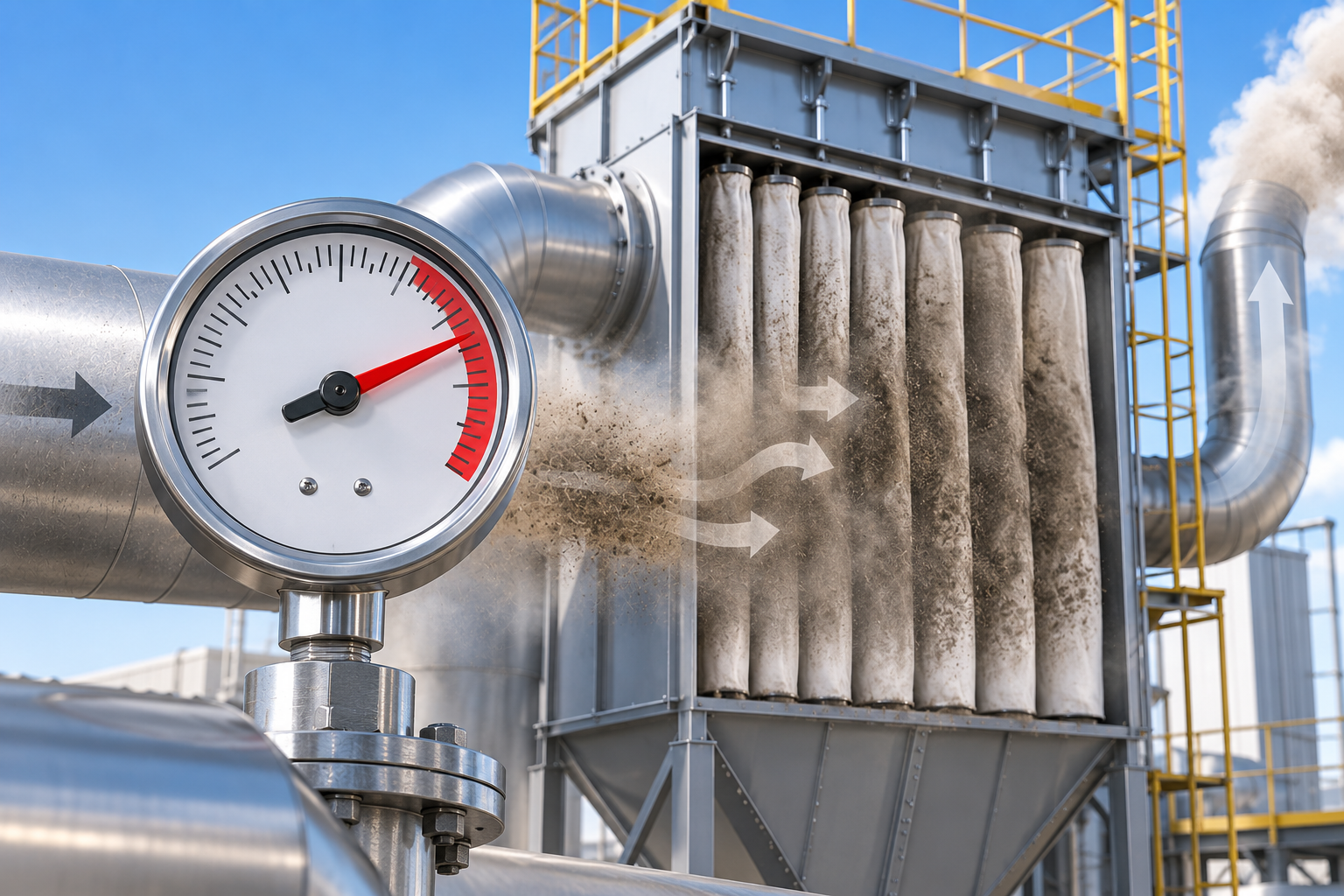
High differential pressure means the system is using more resistance to move air through the collector. The cause may be loaded filters, ineffective cleaning, excessive airflow, difficult dust, condensation or a mechanical problem elsewhere in the system.
| Quick Answer High differential pressure means the system is using more resistance to move air through the collector. The cause may be loaded filters, ineffective cleaning, excessive airflow, difficult dust, condensation or a mechanical problem elsewhere in the system. |
What pressure drop tells you
Differential pressure is the pressure difference across the filter section. It is a useful condition indicator, but it does not identify the cause by itself. Always review it together with airflow, fan position or speed, production load, cleaning activity and the trend over time.
Common filter-related causes
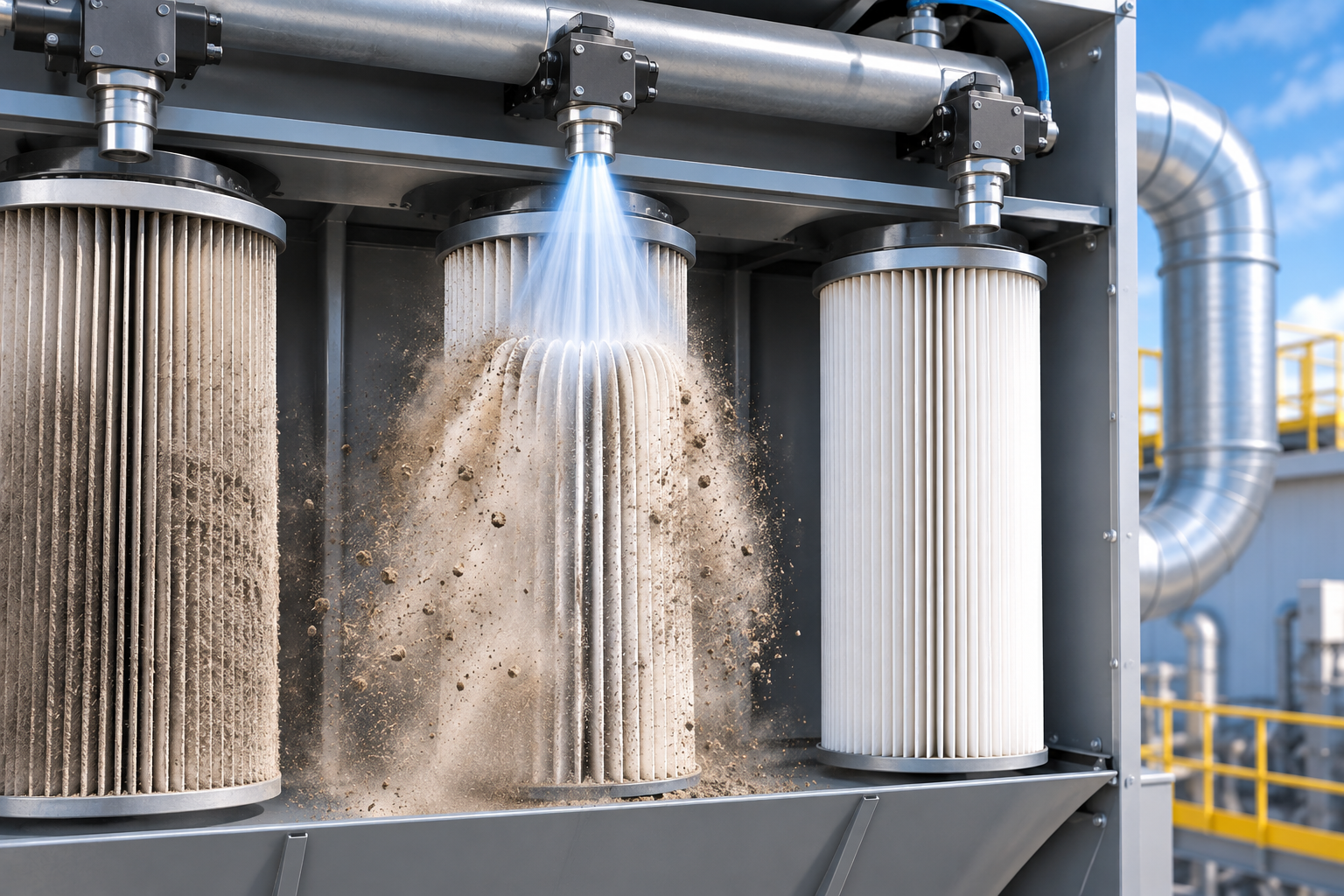
- Dust cake is not being released during pulse cleaning.
- Fine particles have penetrated and blinded depth-loading media.
- Sticky dust, oil or condensation has sealed the media surface.
- The installed media has higher resistance than the approved design.
- Pleats are packed too tightly or bridged with dust.
- Filters are damaged or deformed, creating uneven airflow and loading.
Common system-related causes
- Airflow is higher than the design value, increasing face velocity through the filters.
- Pulse pressure, duration or valve response is inadequate.
- Compressed air contains water or oil.
- Nozzles, venturis or blow pipes are misaligned.
- The hopper is full and dust is re-entrained onto the filters.
- Duct or damper changes have shifted the operating point.
- Pressure taps or tubing are blocked, leaking or incorrectly located.
A step-by-step diagnostic sequence
- Verify the differential-pressure instrument and inspect the sensing lines.
- Record airflow, fan speed and damper position against the design condition.
- Observe whether pressure drops immediately after a cleaning cycle.
- Check compressed-air pressure at the manifold during pulsing, not only when idle.
- Inspect hopper discharge and look for dust re-entrainment.
- Examine several filters from different locations for uneven loading, moisture, bridging or collapse.
- Compare the installed media, filtration area and pleat geometry with the approved specification.
When filter replacement is justified
Replacement is appropriate when the media is irreversibly blinded, physically damaged, contaminated or no longer provides the required airflow after system problems have been corrected. Replacing filters without fixing a failed pulse valve, condensation problem or excessive airflow usually produces the same high differential pressure again.
How to reduce recurrence
Use trend alarms rather than relying on occasional readings. Keep compressed air clean and dry, maintain hopper discharge, control air-to-media ratio and review pulse settings after any filter or process change. When changing media, run a documented trial and compare stabilized pressure drop and cleaning frequency, not only the clean-filter reading.
Frequently Asked Questions
What is a normal dust collector pressure drop?
There is no universal value. The correct operating range depends on collector design, filter type, airflow and the manufacturer’s settings.
Can too much pulse pressure damage filters?
Yes. Excessive or poorly directed pulses can fatigue media, damage pleats or seals and shorten service life.
Why does pressure drop stay high after pulsing?
The dust may be sticky or embedded, the cleaning system may be ineffective, airflow may be excessive, or the pressure reading may be inaccurate.
Technical and safety note
Final media selection must be based on the actual dust, gas composition, temperature, humidity, airflow, cleaning system and collector design. Combustible-dust, fire and explosion controls require a complete system risk assessment by qualified professionals; filter media is only one component.