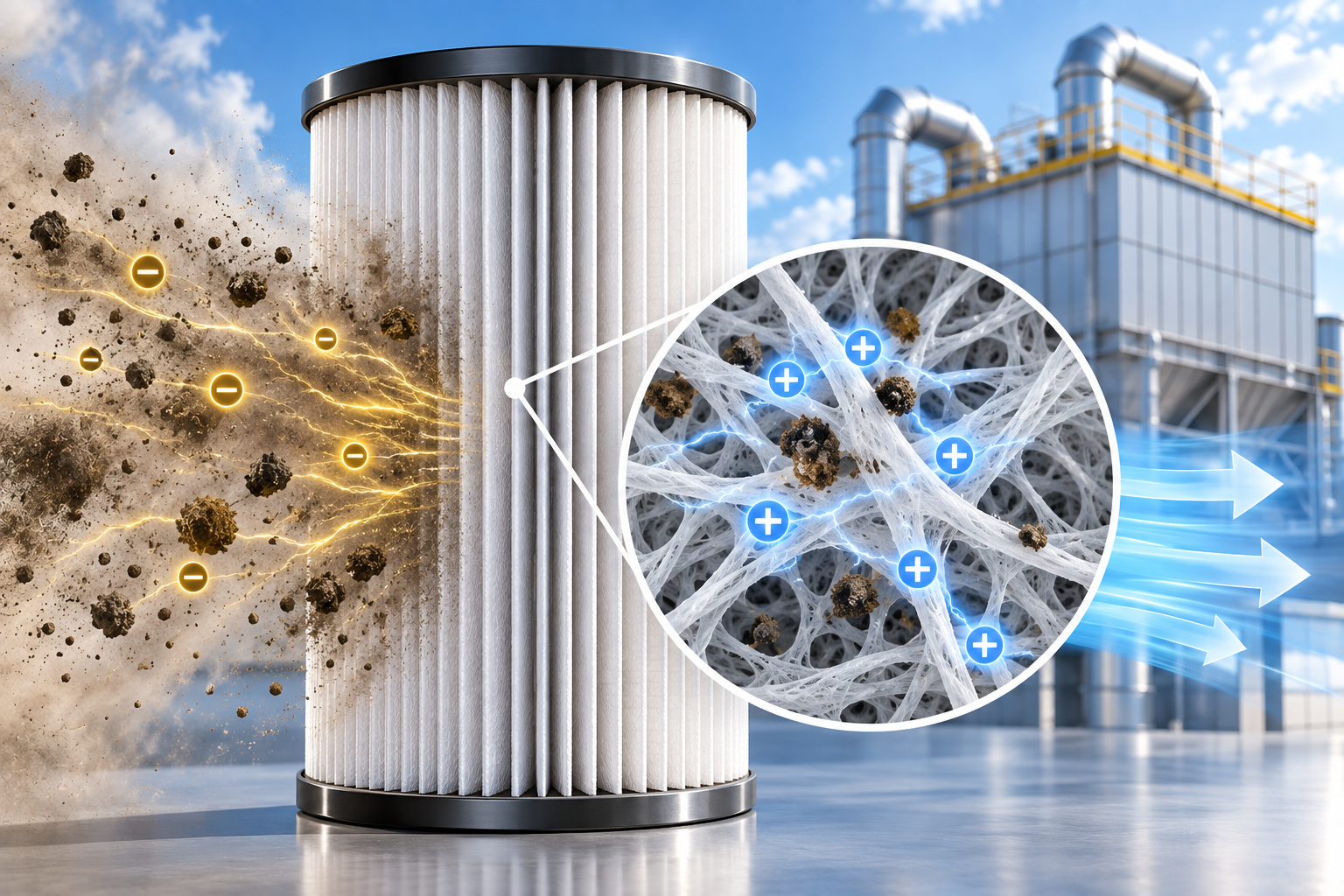
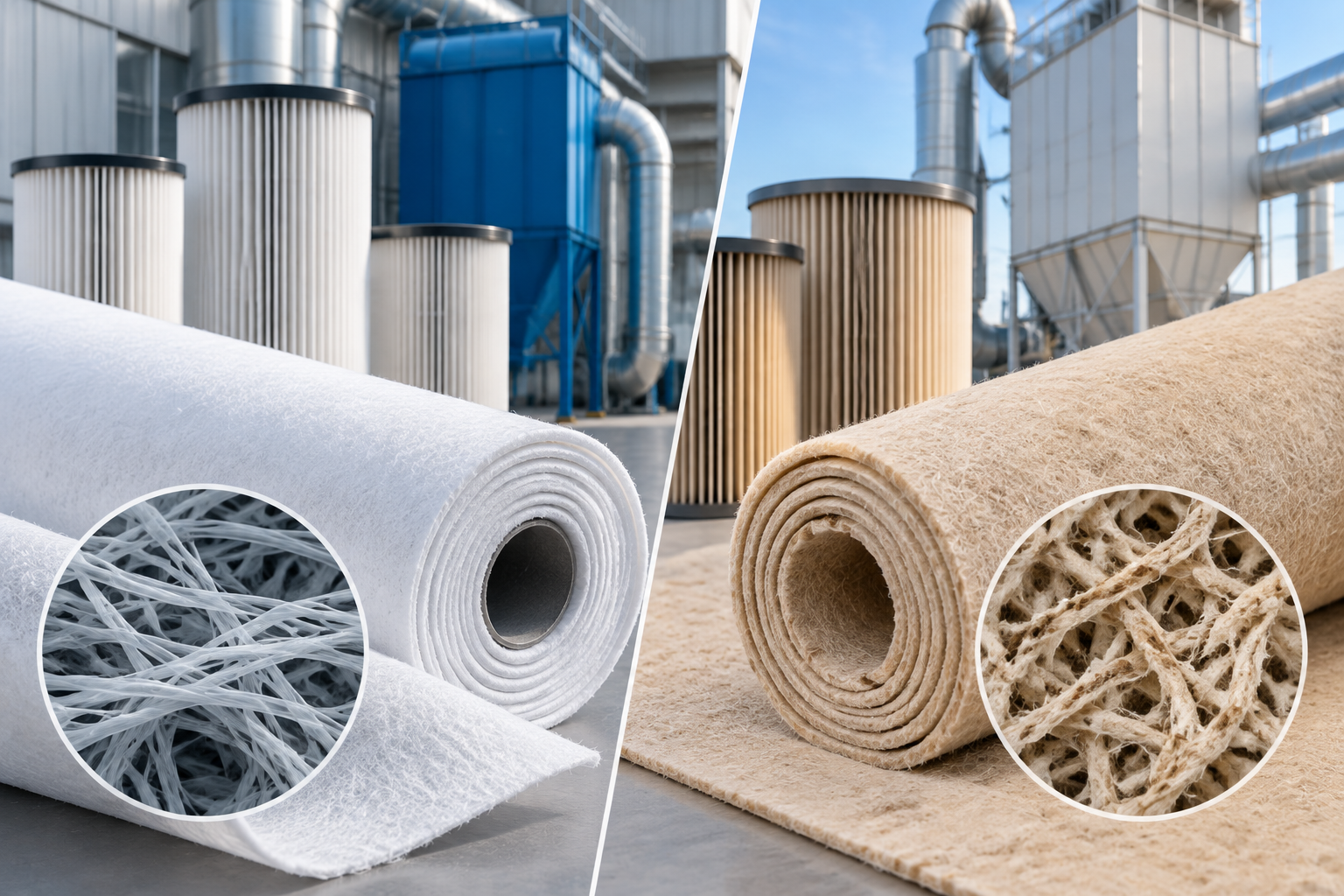
Cellulose is a cost-effective option for many general dry-dust applications, while polyester spunbond generally offers better mechanical durability and is more suitable for demanding pulse-cleaning conditions.
| Quick Answer Cellulose is a cost-effective option for many general dry-dust applications, while polyester spunbond generally offers better mechanical durability and is more suitable for demanding pulse-cleaning conditions. |
The short answer
Neither material is universally better. Cellulose is often selected for dry, stable and cost-sensitive applications. Polyester spunbond is commonly preferred when the media must tolerate stronger pulse cleaning, moisture variation, abrasion, frequent handling or washable-service expectations. Blended cellulose-synthetic media can provide an intermediate option.
How the materials differ
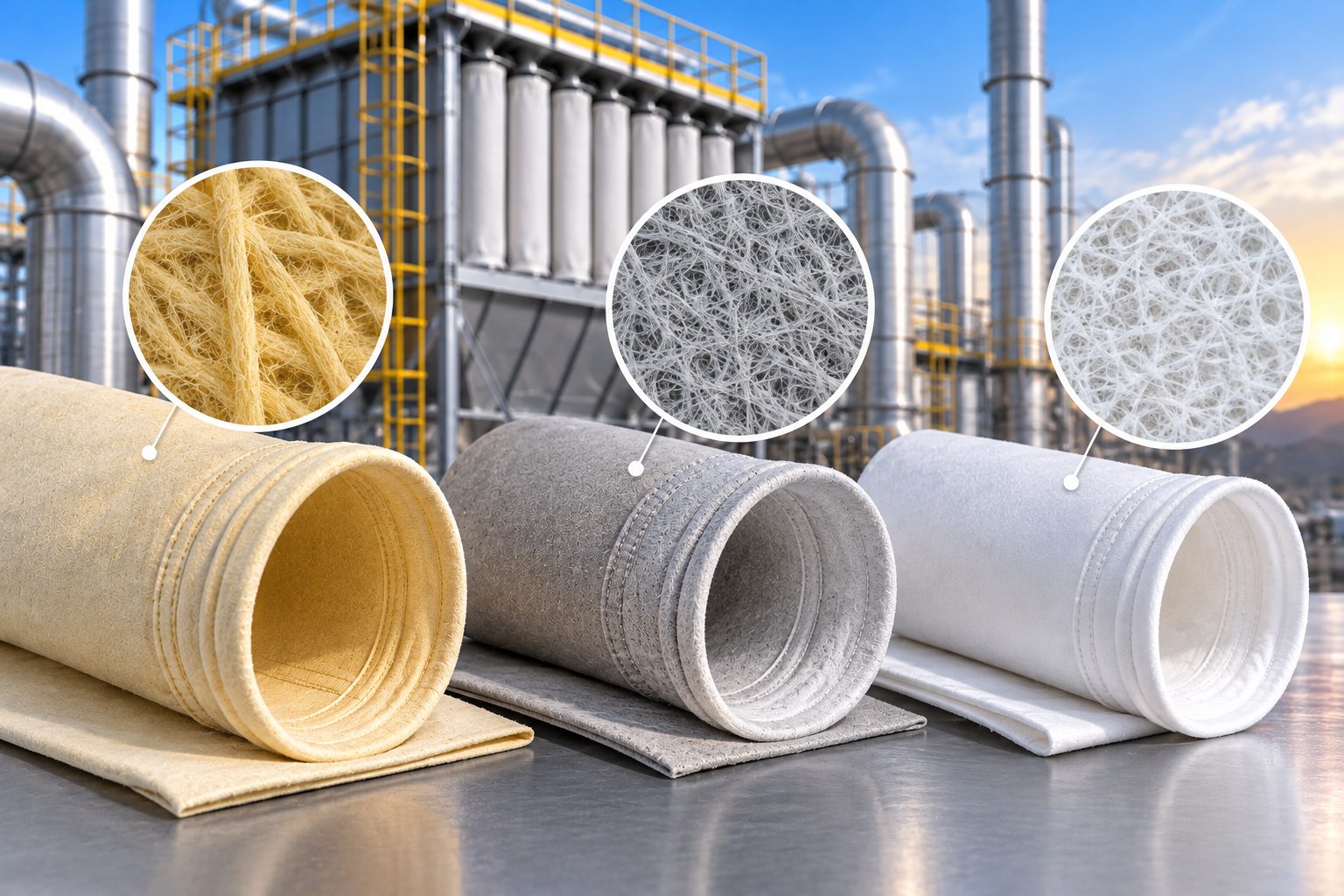
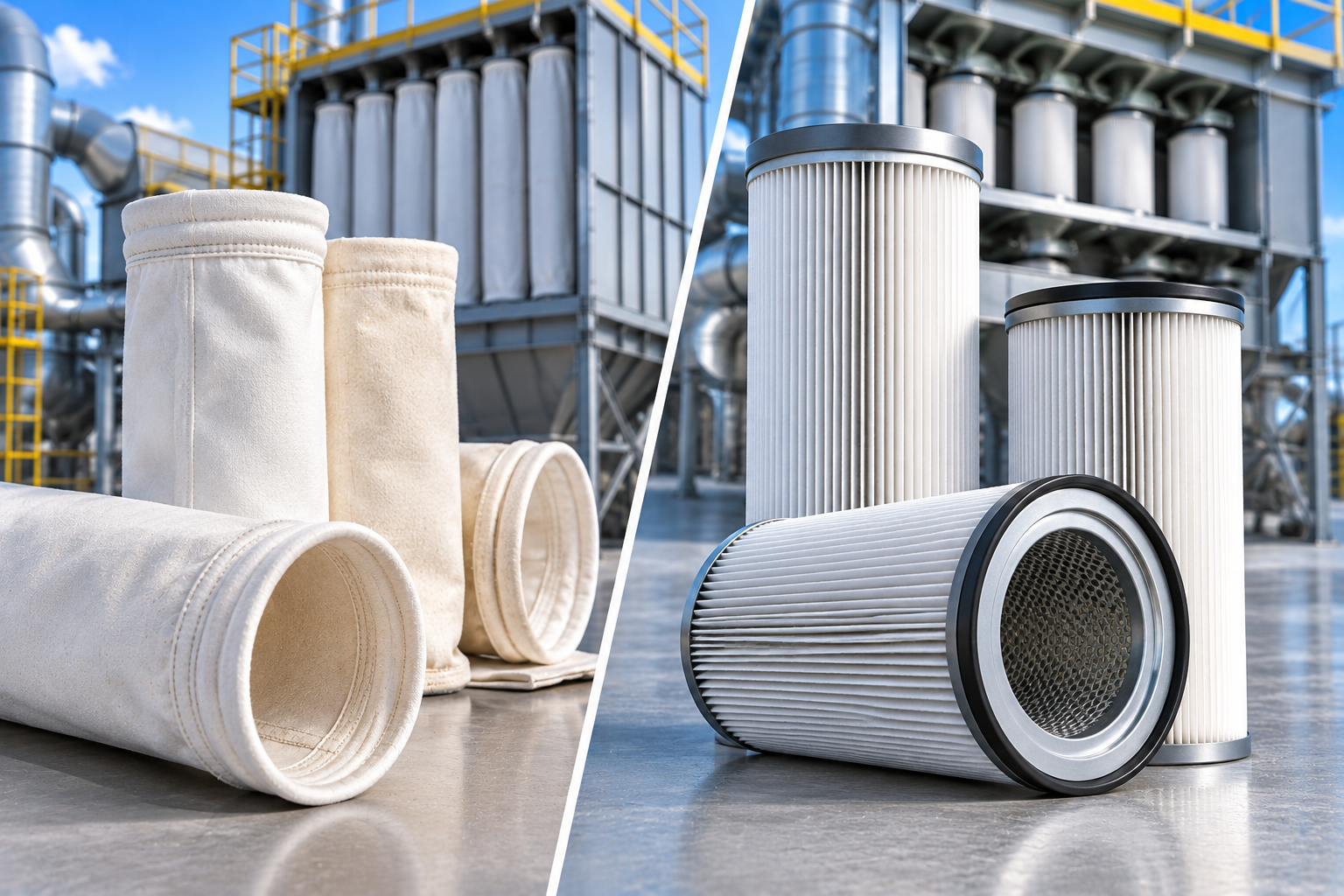
Cellulose media is formed from paper-like fiber networks and is widely used in cartridge filters. Polyester spunbond is a continuous-filament nonwoven with higher inherent tensile and tear strength. These structural differences affect pleating, dust loading, dimensional stability and resistance to mechanical stress.
Comparison by operating factor
- Mechanical strength: polyester spunbond generally provides higher tear, burst and flex durability.
- Moisture: polyester is less sensitive to humidity than untreated cellulose, although finishes and construction also matter.
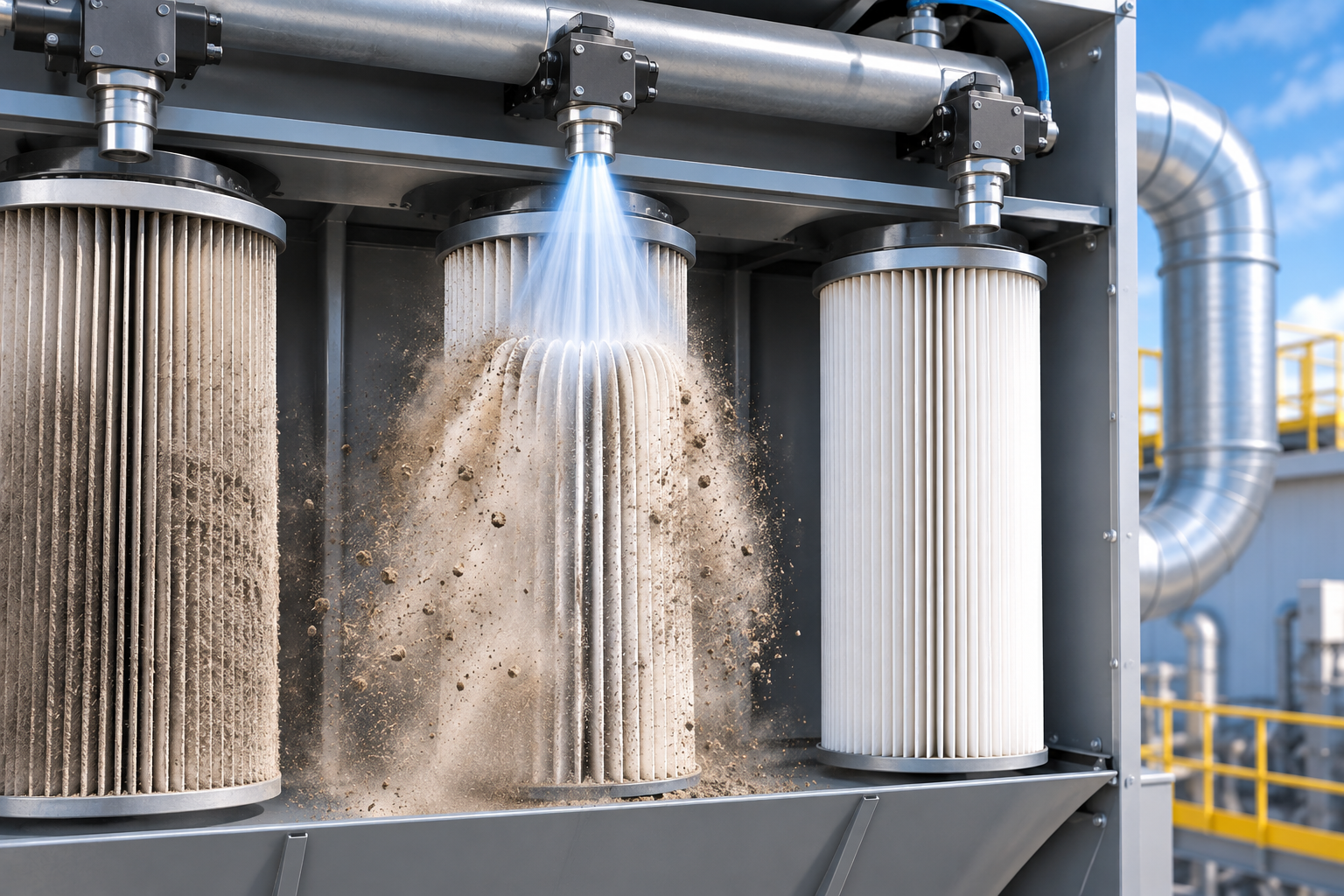
- Pulse cleaning: polyester typically tolerates repeated pulse cycles and demanding cleaning more reliably.
- Initial cost: cellulose is usually more economical for suitable dry applications.
- Pleat density: cellulose can support compact pleat geometries, while polyester stiffness and thickness must be matched to the pleating design.
- Surface treatments: both can be offered with fine-fiber, nanofiber or membrane layers; polyester also supports antistatic, flame-retardant and oil/water-repellent variants.
When cellulose is a practical choice
Cellulose remains useful for general dry dust where temperatures are moderate, humidity is controlled and the cleaning load is not severe. Typical examples may include light machining, general ventilation dust and cost-sensitive replacement cartridges, subject to the collector and dust characteristics.
When polyester spunbond is the stronger choice
Polyester spunbond is often selected for abrasive mineral dust, metal processing, laser or plasma cutting, powder handling and collectors with frequent pulse cleaning. It is also a common support for ePTFE membrane when fine-particle capture and surface dust release are priorities.
Do not compare only by basis weight
Two media with the same grams per square metre can have different thickness, stiffness, permeability, pore structure and surface treatment. Cartridge performance also depends on pleat count, pleat depth, spacing, sealing, support structure and cleaning conditions. A meaningful comparison uses both media data and finished-filter testing.
Selection questions
- Is the dust dry, hygroscopic, oily or sticky?
- How aggressive and frequent is pulse cleaning?
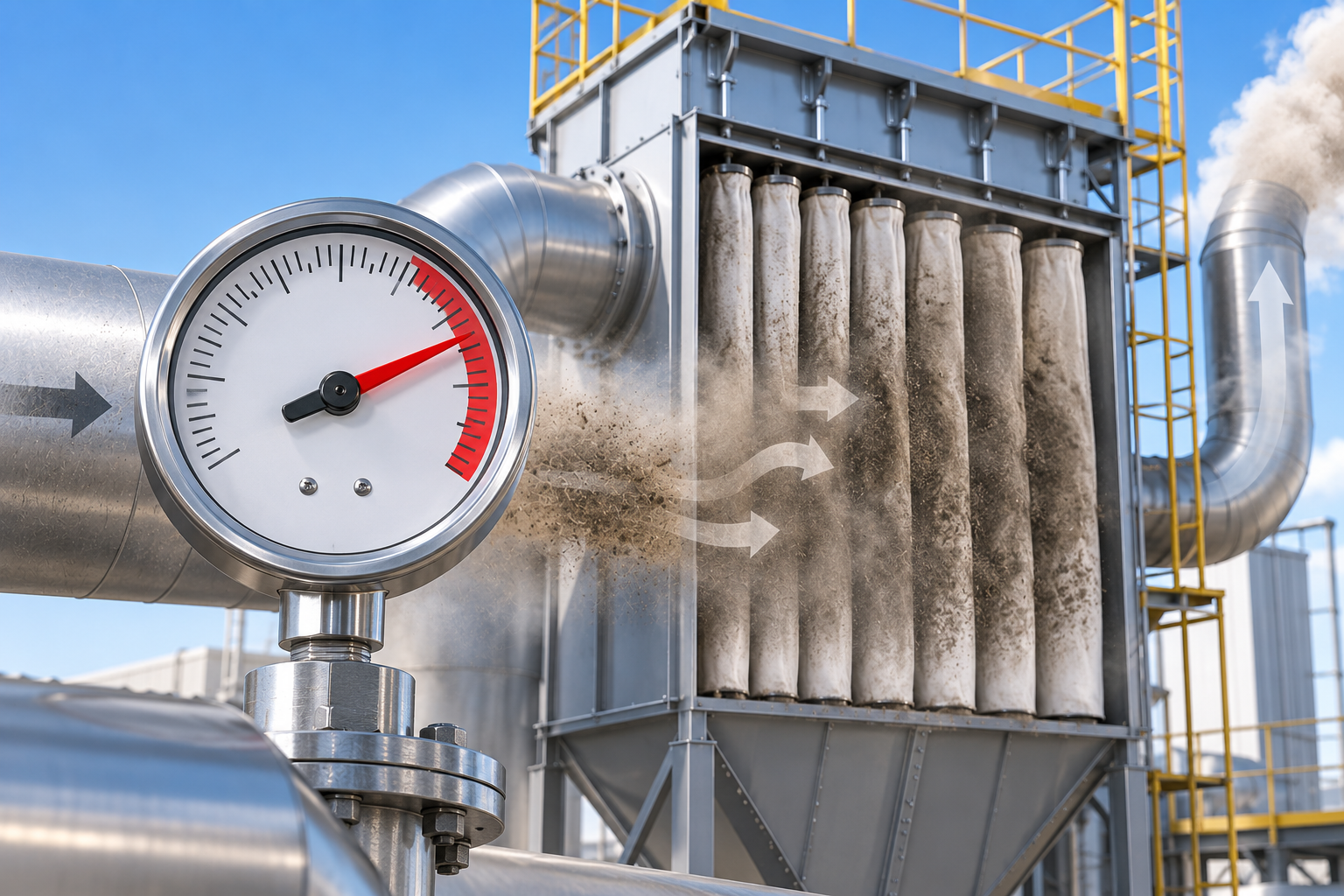
- Is the current failure caused by leakage, high differential pressure, media damage or poor dust release?
- Are antistatic, flame-retardant or membrane properties required?
- What pleat geometry and conversion process will be used?
Frequently Asked Questions
Can polyester spunbond be washed?
Some polyester spunbond constructions tolerate careful cleaning better than cellulose, but washability depends on the media treatment, adhesive, end caps and complete cartridge construction.
Is cellulose unsuitable for pulse-jet collectors?
No. It is widely used in pulse-jet cartridges, but demanding conditions may favor synthetic or blended media.
Can both materials use a PTFE membrane?
Yes, membrane composites exist on different supports, although the support, lamination method and pleat design must be validated.
Technical and safety note
Final media selection must be based on the actual dust, gas composition, temperature, humidity, airflow, cleaning system and collector design. Combustible-dust, fire and explosion controls require a complete system risk assessment by qualified professionals; filter media is only one component.