Good dust filter media is not defined by efficiency alone. It must capture the required particles while maintaining stable airflow, releasing dust during cleaning and surviving the actual mechanical, thermal and chemical conditions.
| Quick Answer Good dust filter media is not defined by efficiency alone. It must capture the required particles while maintaining stable airflow, releasing dust during cleaning and surviving the actual mechanical, thermal and chemical conditions. |
Start with the application, not a single specification
A media that performs well in one dust collector can fail quickly in another. Selection should begin with the dust, airflow, cleaning system and operating environment. Important inputs include particle size and concentration, dust abrasiveness or stickiness, moisture and dew point, temperature, gas chemistry, combustible-dust risk, face velocity and pulse-cleaning settings.
Five properties that define good filter media
- Filtration efficiency: the ability to capture the particle range that matters for the process and emission target.
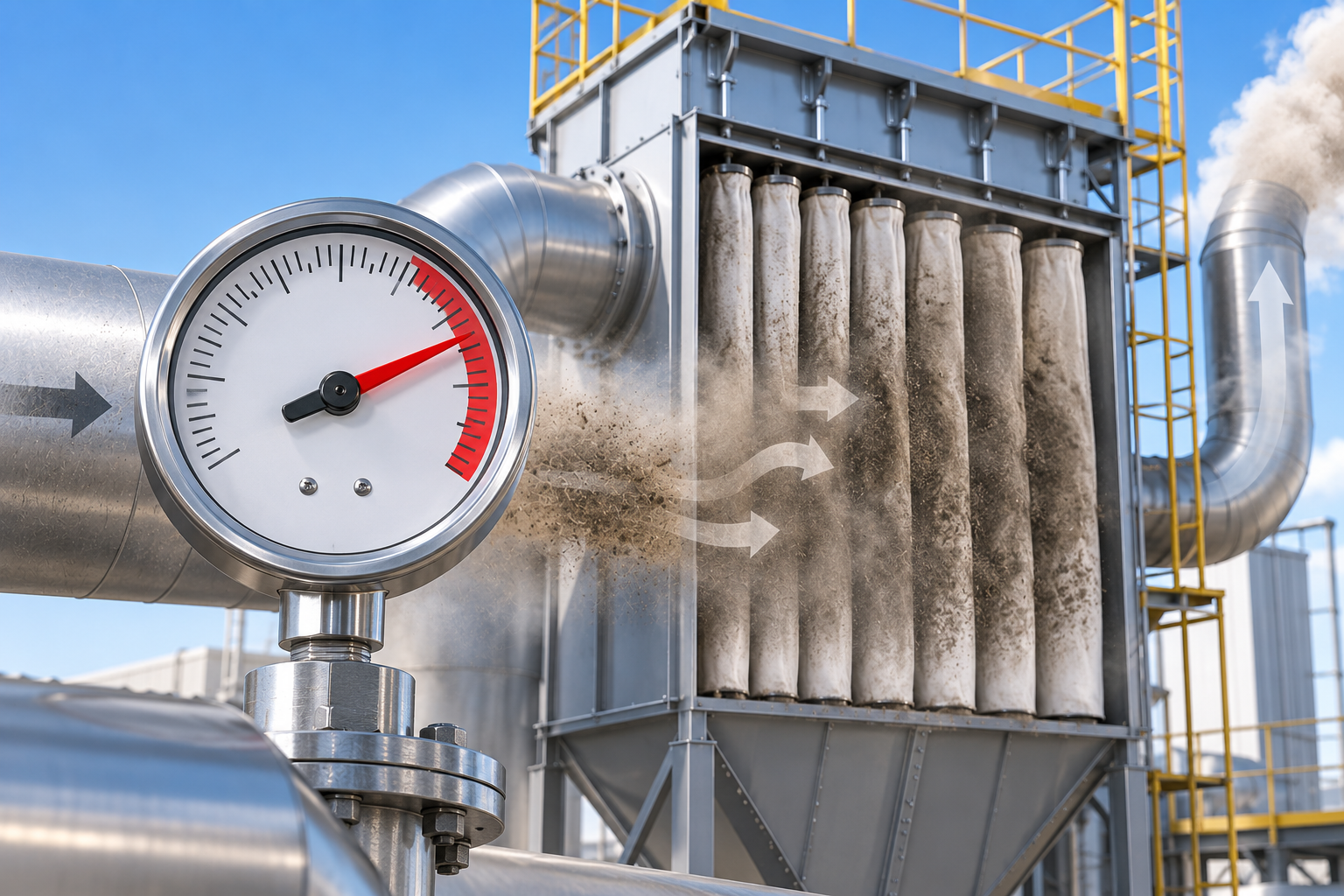
- Initial and operating pressure drop: resistance must be low enough to support airflow and energy efficiency, but initial resistance alone does not predict long-term performance.
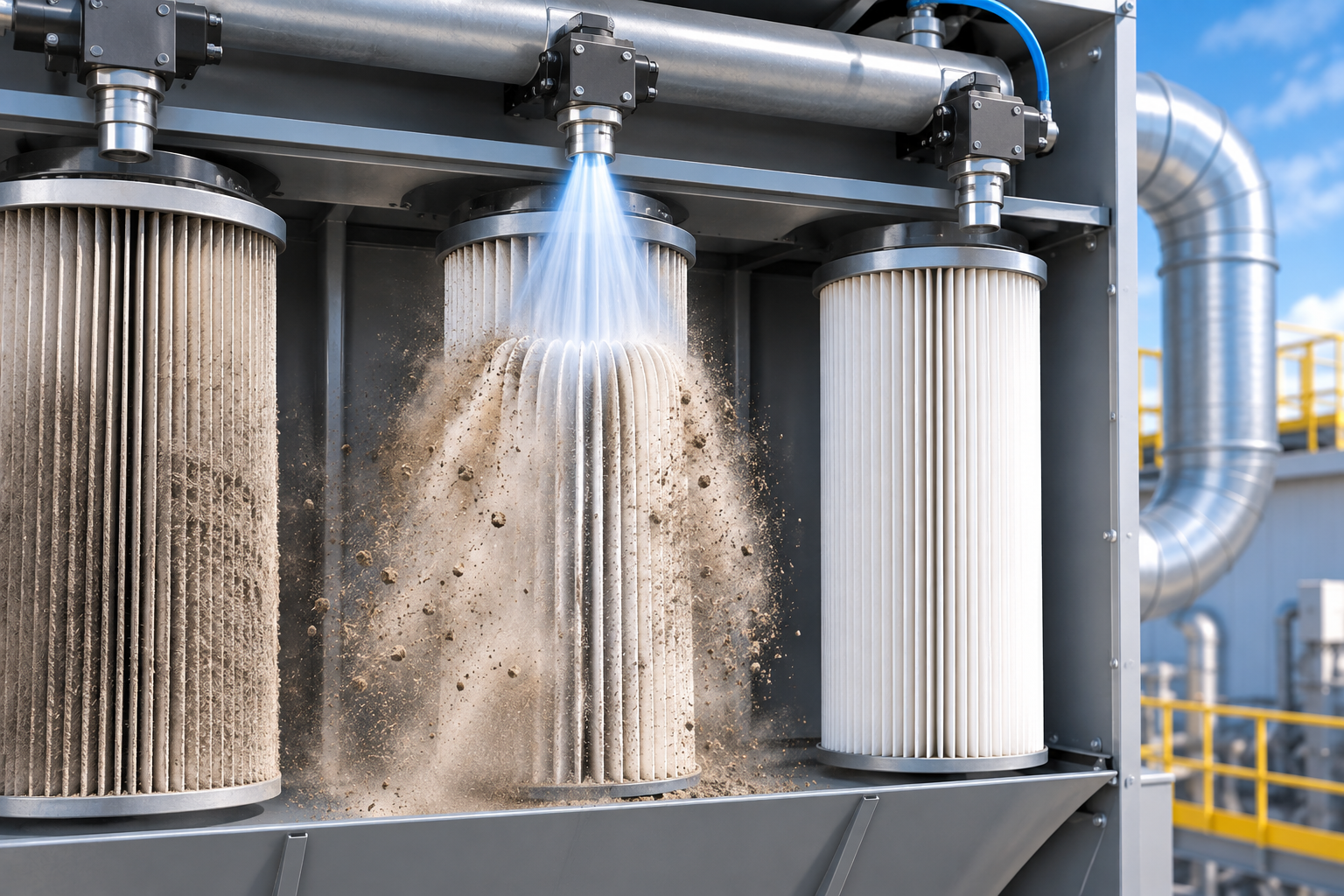
- Dust release and cleanability: the dust cake should detach effectively during pulse cleaning without aggressive settings that damage the media.
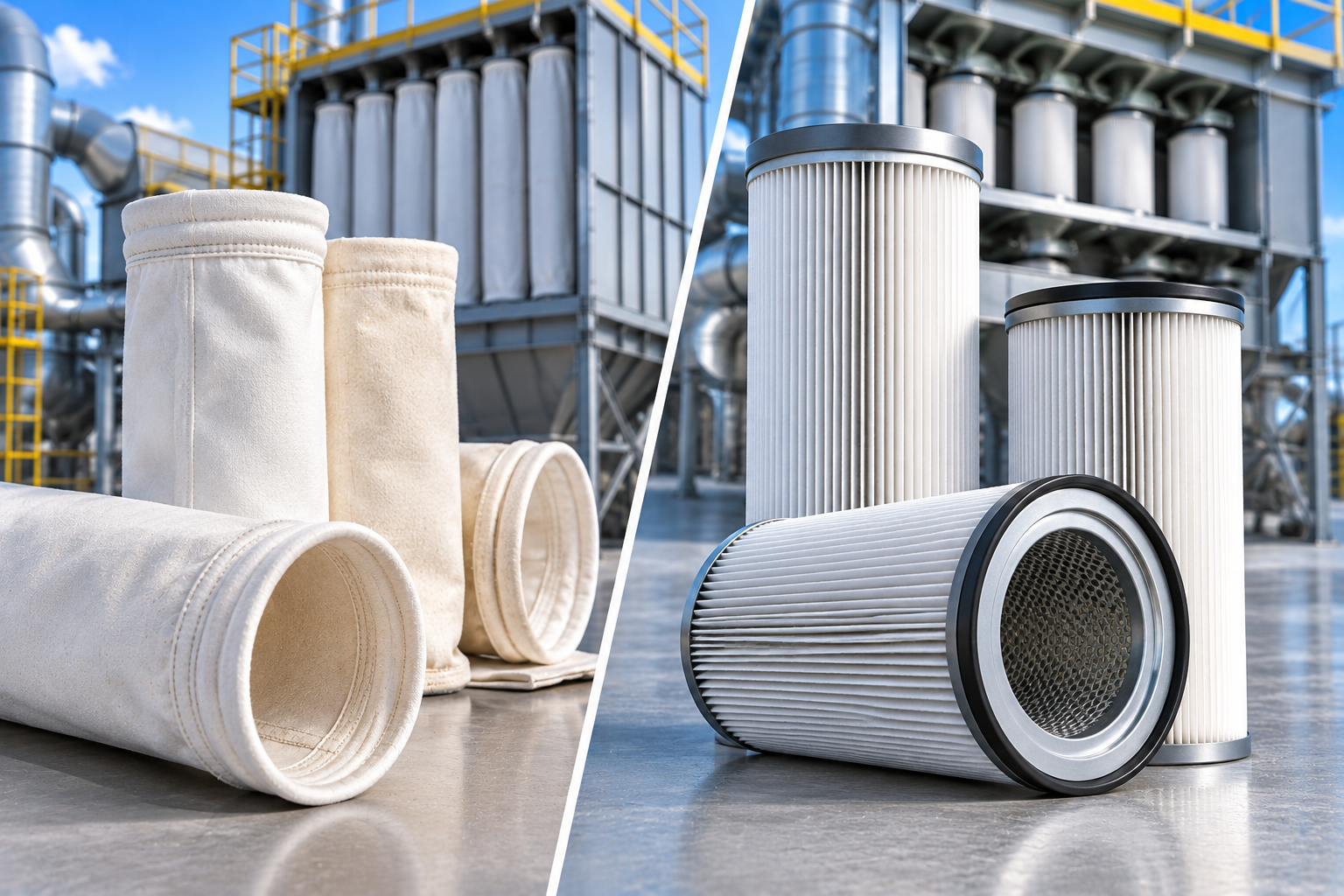
- Mechanical durability: the media must tolerate pleating, vibration, reverse pulses, abrasion and handling without cracking, stretching or delaminating.
- Application compatibility: temperature, humidity, chemicals, electrostatic risk and food-contact requirements may change the suitable fiber, finish or membrane.
Why pressure drop and efficiency must be balanced
Very open media may start with low resistance but allow particles to penetrate deeply, making cleaning more difficult. Very dense media may improve initial capture but consume more fan energy or reduce system airflow. The practical target is a stable operating pressure drop at the required filtration efficiency, not the lowest possible laboratory value.
Surface filtration versus depth filtration
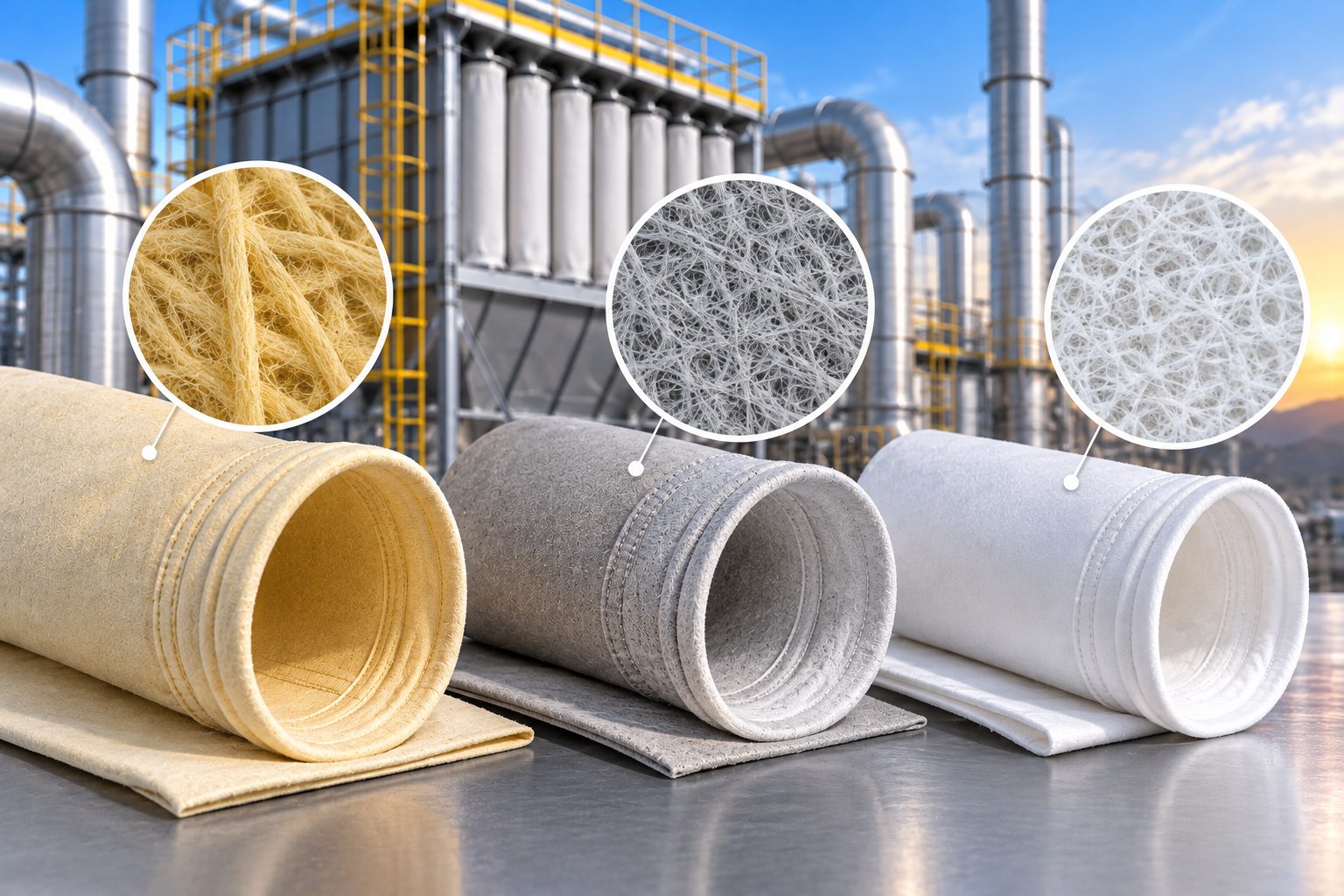
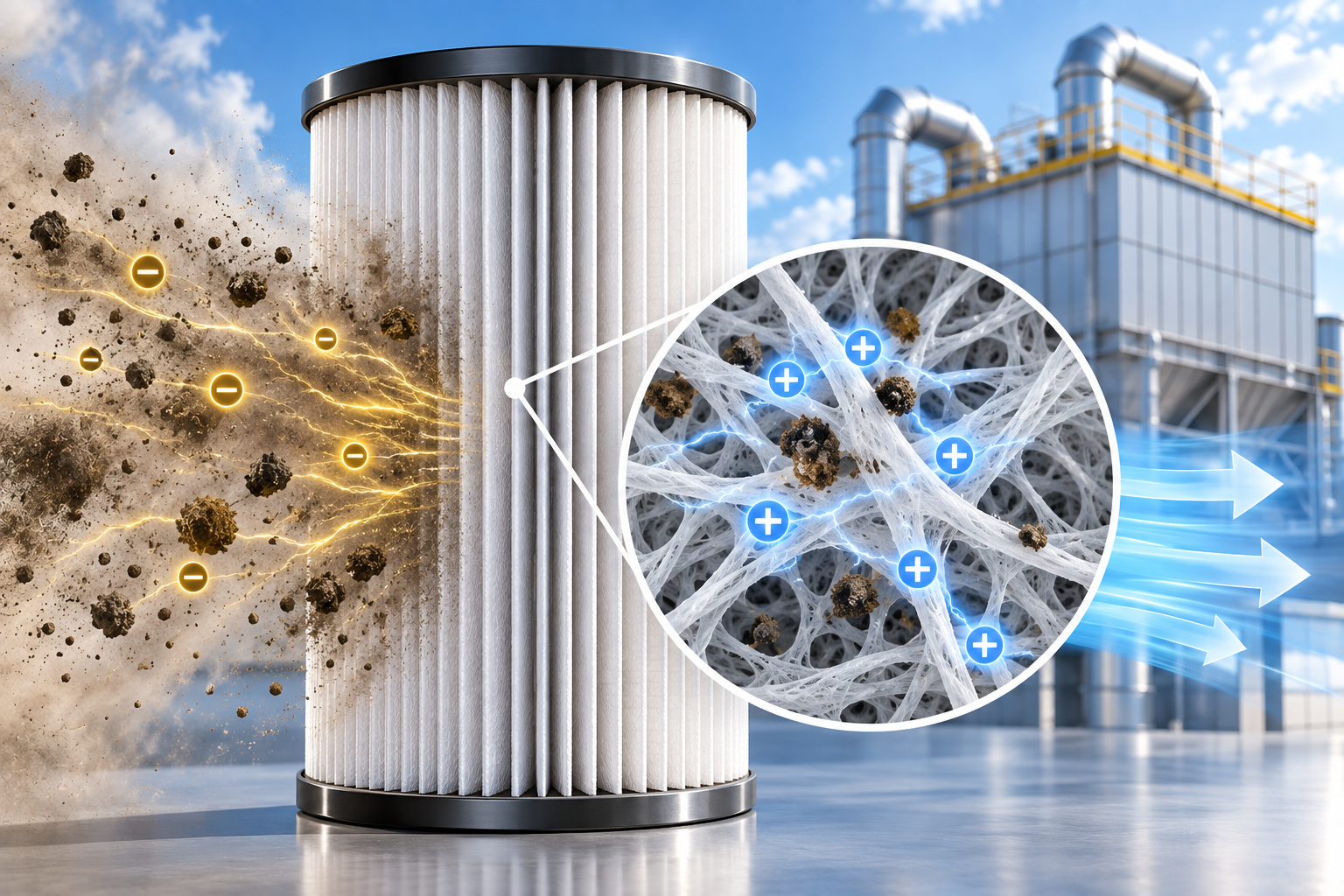
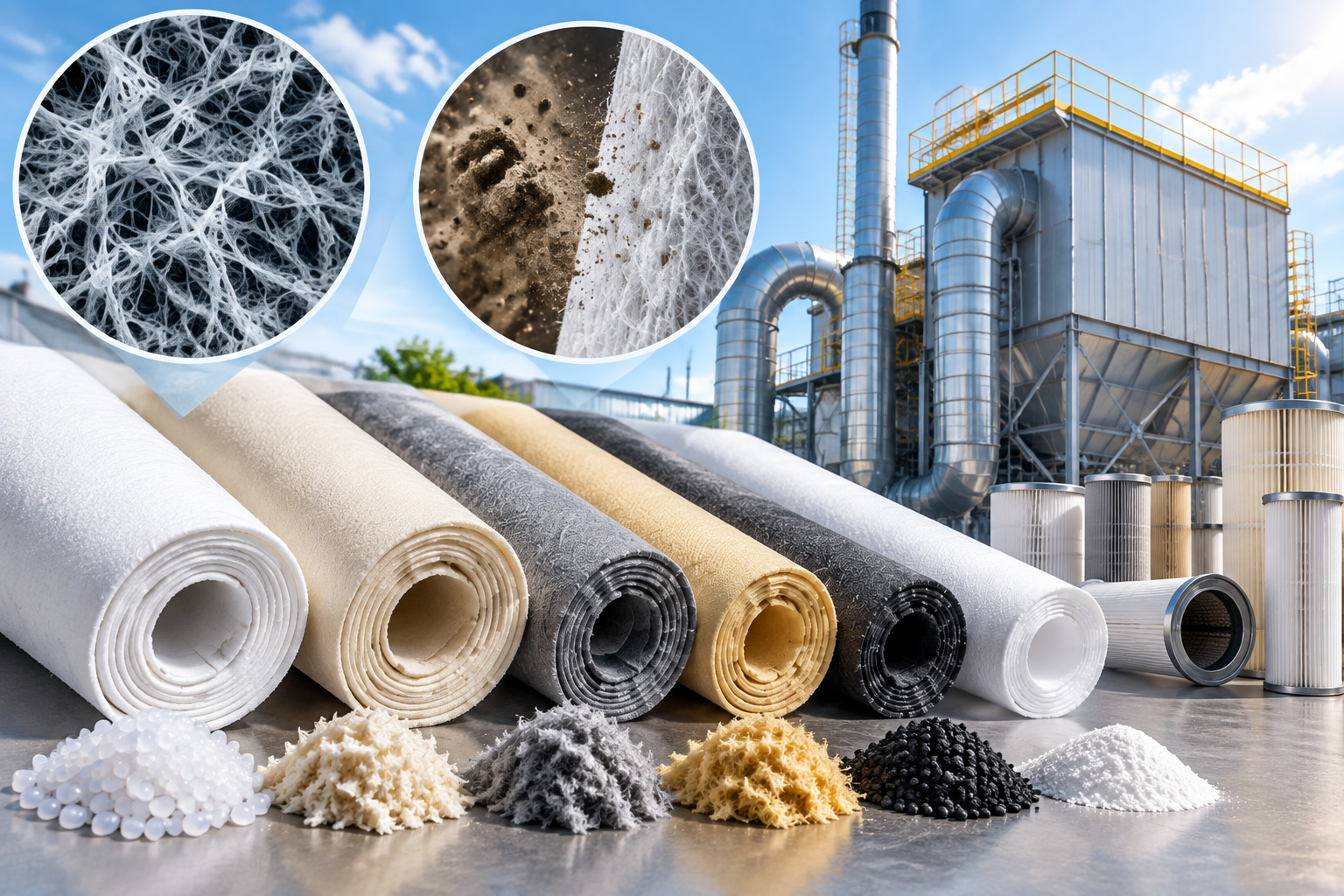
Untreated cellulose and some synthetic media rely partly on particles entering the media structure. A fine-fiber layer or ePTFE membrane promotes surface filtration, so more dust remains on the upstream surface. Surface filtration can improve fine-particle capture and dust release, especially for difficult or submicron dust, but membrane quality, lamination strength and support-media design remain important.
How to compare samples correctly
Compare media at the same test conditions and after dust loading, not only from a clean-media datasheet. Record airflow or face velocity, pressure differential, particle size, test dust, loading mass and cleaning sequence. For pleated products, also review stiffness, thickness, air permeability, crease behavior, adhesive compatibility and pleat stability.
A practical selection checklist
- Define the required emission or downstream cleanliness target.
- Confirm normal and upset temperature, humidity and dew point.
- Describe the dust: particle size, loading, abrasiveness, stickiness, conductivity and combustibility.
- Record collector type, filtration area, air-to-cloth ratio and cleaning method.
- Review the current media, service life and failure mode.
- Validate the selected grade in a controlled trial before full conversion.
Frequently Asked Questions
Is higher filtration efficiency always better?
Not by itself. The required efficiency must be achieved together with acceptable airflow, pressure drop, cleanability and service life.
Does low initial pressure drop guarantee energy savings?
No. Dust-loading behavior and the stabilized operating pressure drop are more meaningful than the clean-media value alone.
Which media is best for fine dust?
Fine-fiber or membrane-laminated media is often considered, but the correct choice depends on particle size, dust behavior, cleaning conditions and the emission target.
Technical and safety note
Final media selection must be based on the actual dust, gas composition, temperature, humidity, airflow, cleaning system and collector design. Combustible-dust, fire and explosion controls require a complete system risk assessment by qualified professionals; filter media is only one component.